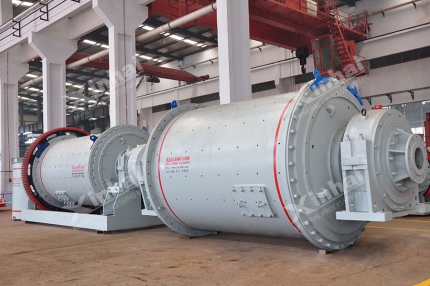
Ball mill and rod mill are quite similar whether in external shape or working principle. So what are the differences between ball mill and rod mill? Xinhai mineral processing equipment specialist explains it as follows:
Similarities Between Ball Mill and Rod Mill
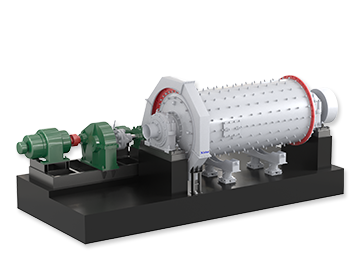
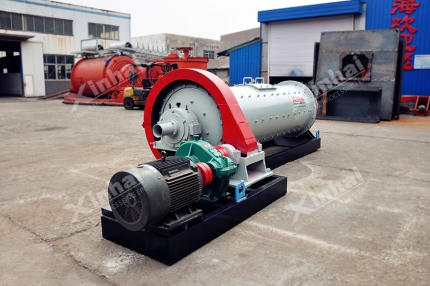
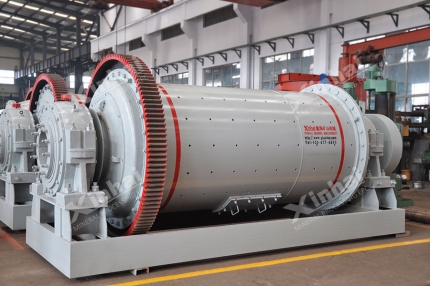
Both ball mill and rod mill are cylinder grinding mill. Their main structural features include:
A rotating cylinder supported by bearings
Closed end covers with hollow shaft necks
Material fed through the cylinder inlet and discharged from the outlet
During operation, the cylinder rotates together with the materials inside. Ores are ground through impact and attrition caused by the falling grinding media and the ores themselves. As new material continuously enters the mill, internal pressure drives the ground material toward the discharge end.
In wet grinding, qualified products are carried out of the mill by water flow, while in dry grinding, materials are discharged directly from the outlet.
Both ball mill and rod mill are typically driven by asynchronous motors or synchronous motors, and their operating speed is maintained below the critical speed. They can be applied in both wet and dry grinding processes to treat ores, rocks, and other materials of varying hardness.
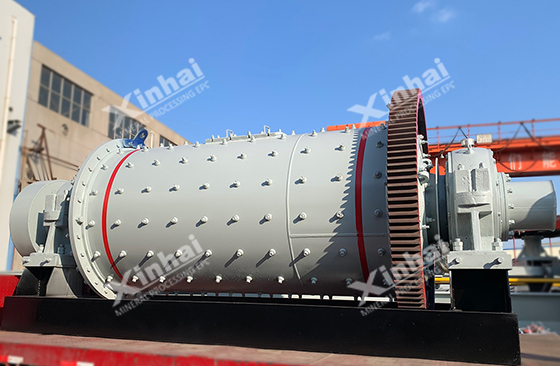
Key Differences Between Ball Mill and Rod Mill
Although Ball mill and rod mill share similar structures and operating principles, they differ mainly in grinding media and product particle size characteristics.
1. Difference in Feed and Product Particle Size
Both ball mill and rod mill are used to process ores, rocks, and other materials with a feed particle size generally not exceeding 60 mm.
However, the product particle size differs:
Ball mill typically produces a finer product, with particle sizes around 1.5 mm and below.
Rod mill usually produces a coarser product, with particle sizes generally below 6 mm.
This difference makes ball mill more suitable for fine grinding, while rod mill is often used for coarse grinding stages.
2. Difference in Grinding Media
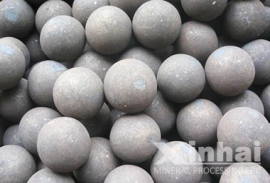
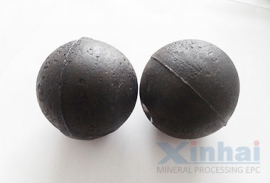
The most fundamental distinction lies in the grinding media:
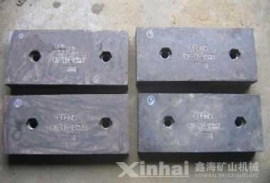
In a rod mill, steel bars tend to fall and contact the mineral surface in a linear manner. This produces a selective grinding effect, meaning that larger particles are preferentially broken first. As a result, the product particle size distribution from a rod mill is relatively more uniform, and overgrinding is reduced.
Because of this characteristic, rod mill is often applied in coarse grinding circuits or in gravity separation plants where excessive fine particles are undesirable.
Summary: Ball Mill vs Rod Mill
In the end, Xinhai mineral processing equipment specialist summarizes that ball mill and rod mill have roughly the same principle and structure. The primary differences are:
Grinding media: steel balls in a ball mill, steel bars in a rod mill
Product particle size: finer in a ball mill, coarser and more uniform in a rod mill
Understanding these differences helps engineers select the appropriate grinding equipment based on grinding stage requirements and downstream beneficiation processes.
 marketing@xinhaimining.com
  0086 13810327080





 CHAT
CHAT MESSAGE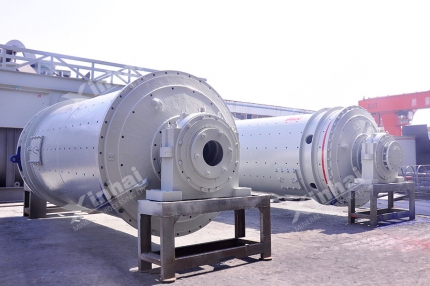
.jpg "dry rod mill")


