02
Three Flagship Minerals
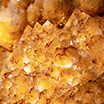
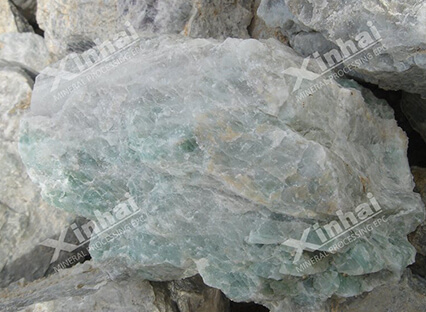
Fluorite
Gangue Type Sets the Route
Resource & grade criteria
Gangue type is the first key variable in fluorite beneficiation. Siliceous ores typically follow a sequence of coarse grinding and roughing, regrinding, and multiple cleaning stages with acidified water glass; carbonate (calcite) ores must first address the challenge of selective suppression. Current industry development is focused on fluorine-free, acid-free, non-toxic reagent systems and low-temperature, high-efficiency collectors that can address both cost and environmental compliance.
How Xinhai does it
Test work determines the grind size, reagent regime, and number of cleaning stages; flowsheets are developed around the ore rather than applied as a standard template. For multi-ore-body supplies, sampling starts with representativeness: a primary sample drives the test program while secondary samples verify it before the recommended flowsheet is fixed.
Project experience
Jiangxi 300 t/d fluorite flotation EPC project (China)
Mongolia 800 t/d fluorite flotation project
Italy 1,200 t/d galena–fluorite complex-ore EPC project
Inner Mongolia 100,000 t/a fluorite mining turnkey and operation project
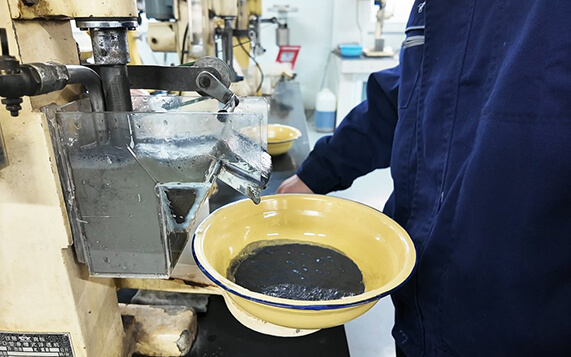
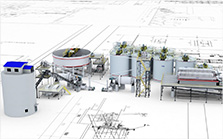
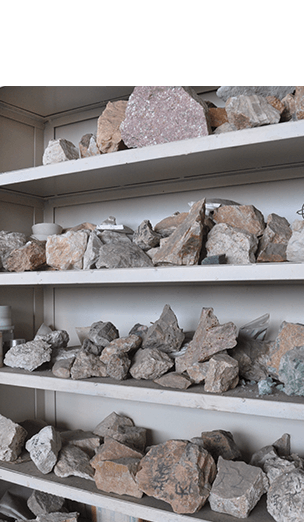
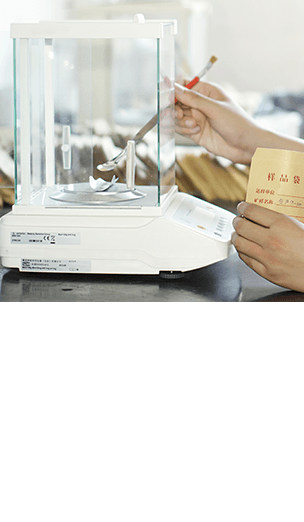
Metallurgical flotation test
-
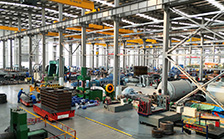
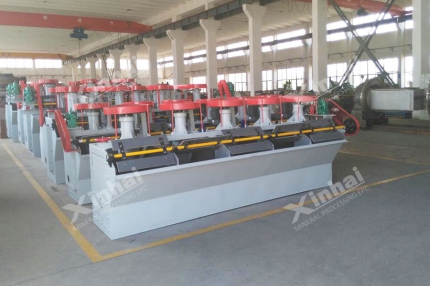
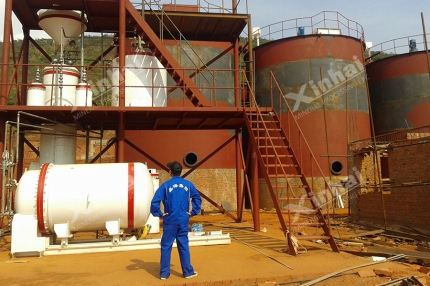
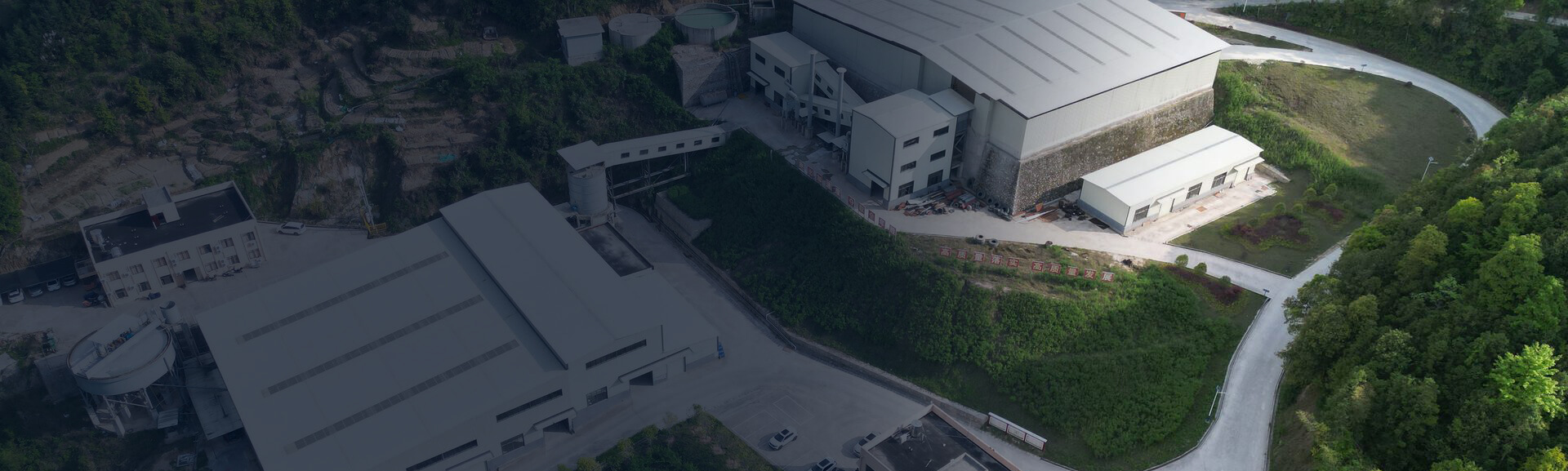
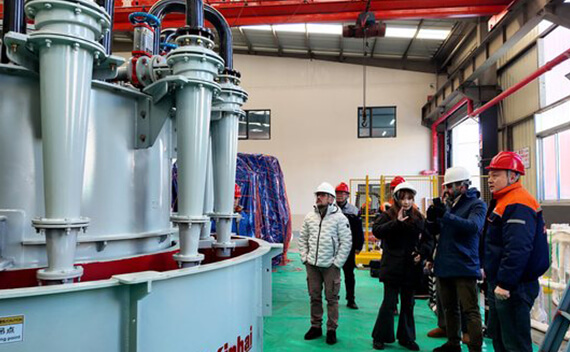
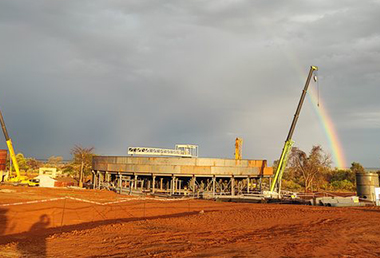
Customer delegation inspecting the Xinhai manufacturing base.
-
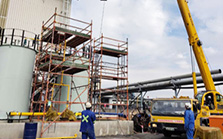
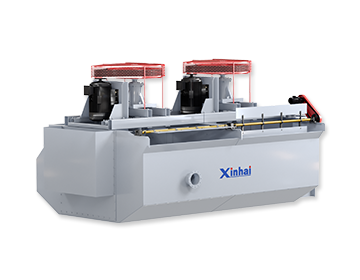
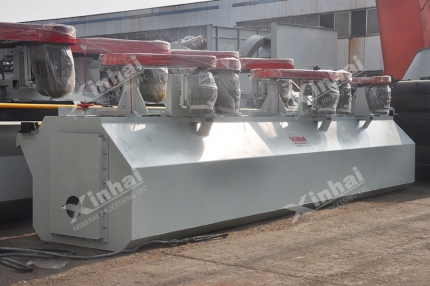
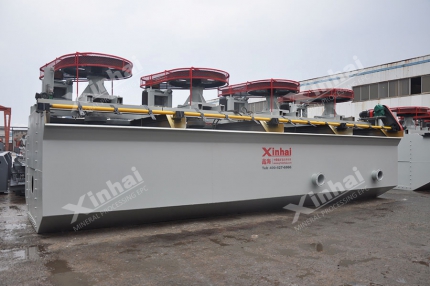
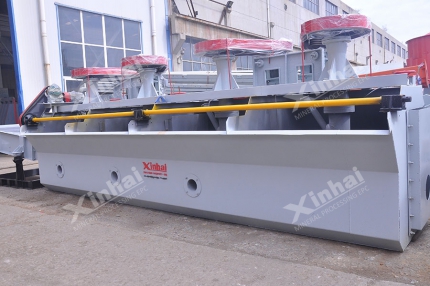
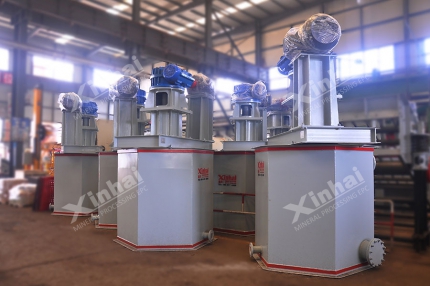
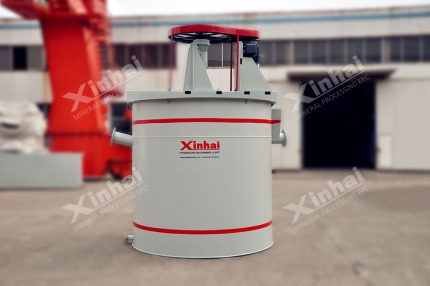
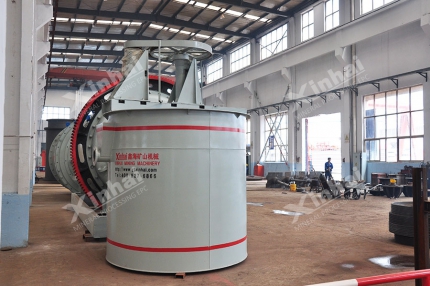
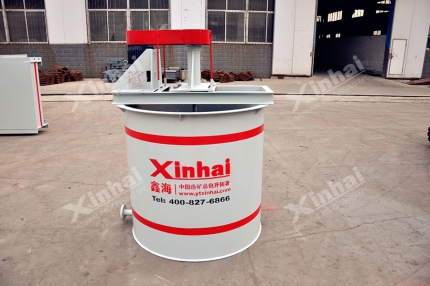
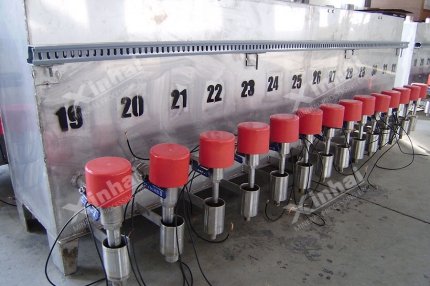
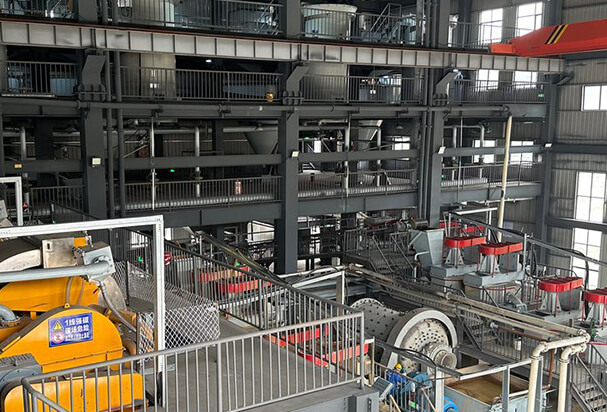
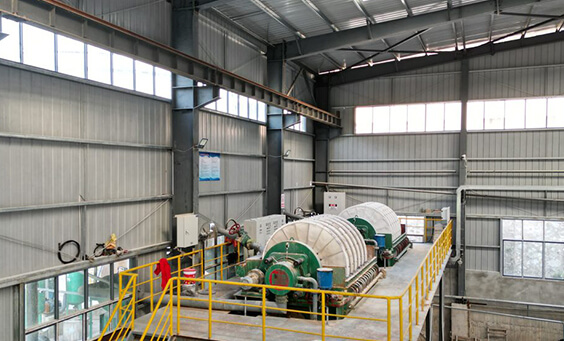
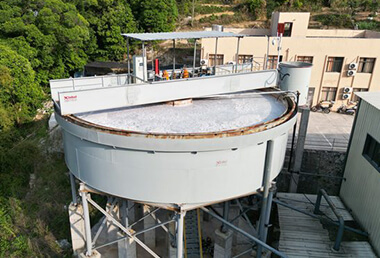
Flotation machines at the Jiangxi 300 t/d fluorite plant, China.
What you get — A flotation route tailored to your acid-grade or metallurgical-grade specifications, supported by plant construction and operating services.
Quartz Sand
One Production Line, Several Grade Steps
Resource & grade criteria
The required purification depth depends on the product market: ordinary industrial sand at SiO2≥ 98.5%, glass sand ≥ 99.3%, solar grade ≥ 99.9%, and electronic grade ≥ 99.99%, with iron limits tightening step by step (Fe2O3 from percentage to ppm level). The standard purification chain runs from scrubbing and desliming to classification → magnetic separation (high-gradient at ~1.2 T for industrial iron removal; 4–5 T for high-purity duty) → flotation to remove feldspar and mica → acid leaching; lattice-bound impurities require deeper processing routes such as chlorination roasting. Specific targets should be confirmed through test work on the ore.
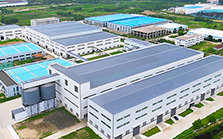
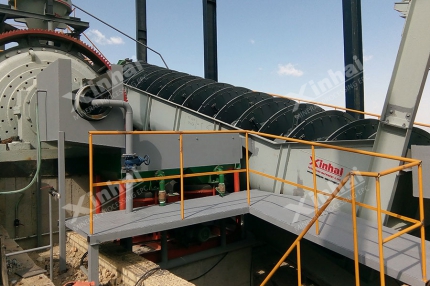
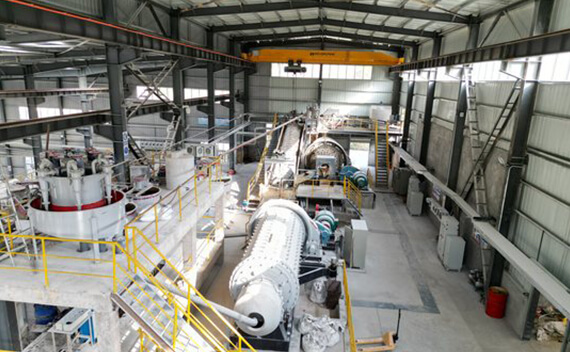
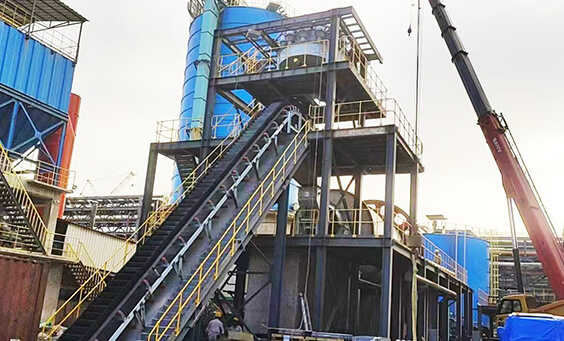
Processing line at the Hubei 900,000 t/a quartz sand project, China.
How Xinhai does it
Xinhai maintains a dedicated quartz-mineral processing capability portfolio; the flotation stage offers both fluorinated and fluorine-free routes, the latter exploiting differences in zeta potential between quartz and feldspar for greener separation.
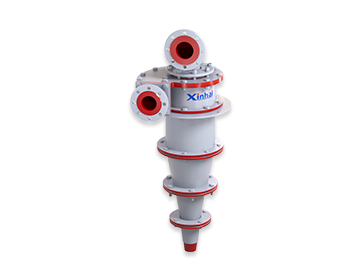
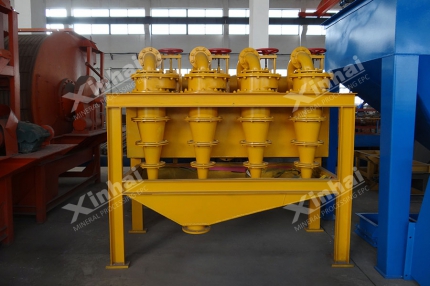
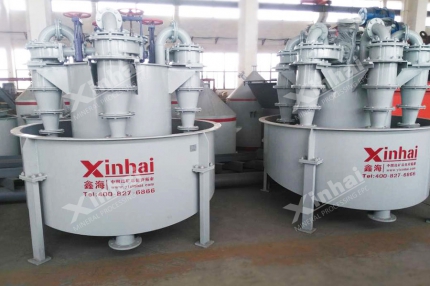
On two domestic silica-sand lines in Anhui and Fujian, Xinhai hydrocyclones and high-frequency dewatering screens have reduced product moisture to roughly 10%, with stable operation and low failure rates.
What you get — Iron removal, desliming, classification, and dewatering circuits designed around your target grade — from construction sand to glass
or solar-grade sand.
Barite
Density is the Gift, Brightness is the Work
Resource & grade criteria
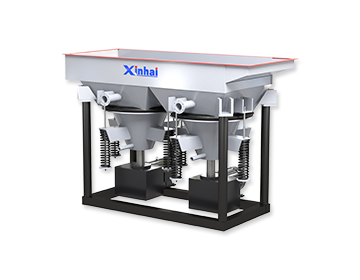
Barite beneficiation takes advantage of its large specific-gravity contrast with quartz, calcite, or clay: barite has a specific gravity of about 4.5, so gravity separation is often the most cost-effective route for coarse ores. Liberation size and head grade help determine the path: coarse-grained (+0.5 mm) ore with BaSO4 ≥ 30% is typically treated by jigging; fine-grained (-0.074 mm) or low-grade (BaSO4 8–20%) ore may require flotation (the classic "one roughing, three cleaning, two scavenging" configuration) to reach high purity. Iron can reduce product whiteness, so pharmaceutical- and coating-grade products usually need wet high-gradient magnetic separation (1.0–1.5 T) plus acid leaching where required. As a drilling-mud weighting agent, typical requirements are a specified fineness of -0.056 mm, density > 4.2 g/cm³, and grade > 95%.
 marketing@xinhaimining.com
 0086 13810327080