Digital transformation is revolutionizing the mining industry, especially for legacy plants where the challenge lies in achieving measurable value from new systems. A notable case is the 2,000t/d lithium mica processing plant in Inner Mongolia, which initially operated without automation. As production demands grew, the inadequacies of this manual model affected efficiency and reliability.
To tackle these issues, Xinhai Mining Group initiated a comprehensive automation upgrade across various systems, including crushing, grinding, and water supply. They also established a centralized monitoring platform, leading to fully automated production and a robust data infrastructure that significantly advanced the plant's digital transformation.
Use the table of contents below to navigate through the guide:
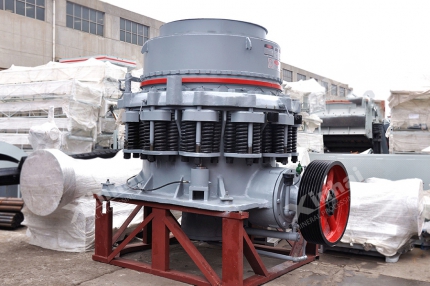
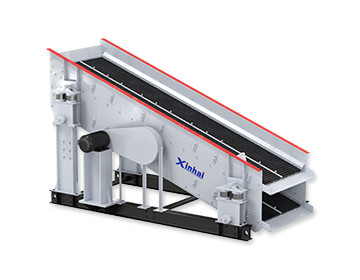
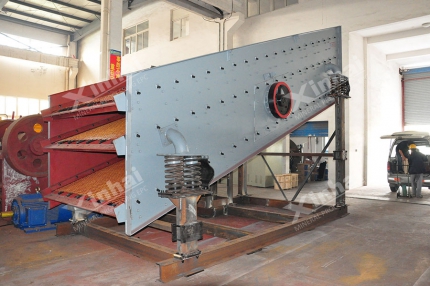
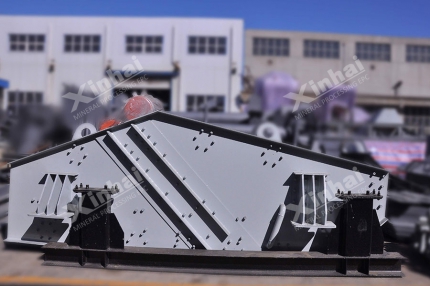
01Crushing & Screening: Safer Operations Through Interlocking Control
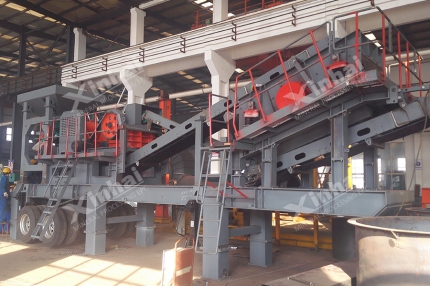
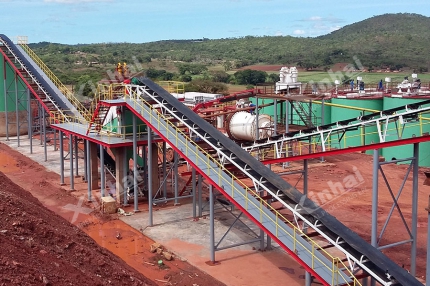
Crushing and screening circuits involve multiple interconnected pieces of equipment, where a single operational error can affect the performance of the entire process line.
Xinhai Mining introduced a fully automated sequential interlocking control system. Equipment start-up and shutdown sequences follow predefined logic, preceded by audible and visual alarms to enhance site safety and minimize human error.
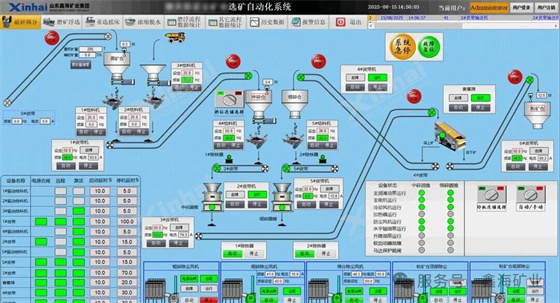
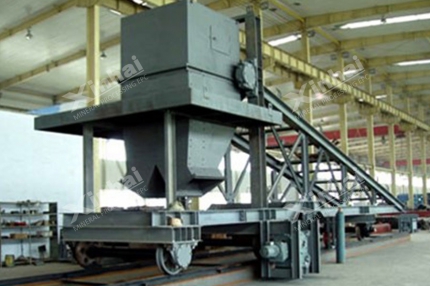
Real-time silo level monitoring automatically detects high and low levels, triggering protective interlocks to prevent overflow, blockages, or feeder starvation. Continuous equipment performance tracking has shifted maintenance from reactive repairs to condition-based and preventive strategies, freeing operators from constant manual oversight and improving overall efficiency.
02Grinding and Classification: Dynamic Control for Stable Process Performance
Grinding and classification performance directly influence downstream flotation results. Before the upgrade, fluctuations in feed rate often led to unstable mill loading conditions and variations in slurry density, undermining process consistency.
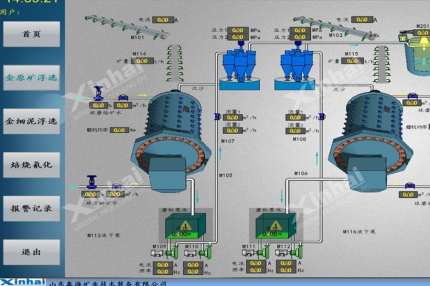
Xinhai deployed an intelligent grinding control system that continuously monitors mill power draw and acoustic signals, automatically adjusting feed rate and water addition to maintain target operating conditions. Through dual closed-loop control of slurry density and flow rate, the system stabilizes cyclone feed conditions and improves classification performance.
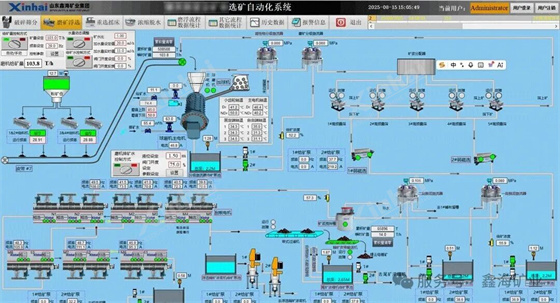
Intelligent grinding and classification control system for lithium mica beneficiation plant
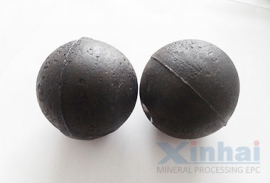
In addition, a grinding media management model automatically calculates steel ball addition requirements based on throughput and wear data, enabling more accurate media replenishment.
Following implementation, Ball mill throughput increased from 80 t/h to 102 t/h while maintaining stable grind-size distribution, pump box levels, and slurry density within process-control targets.
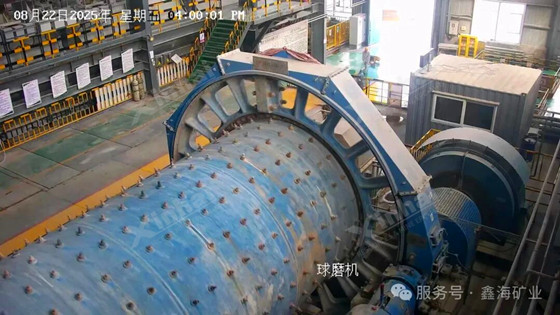
Ball mill automation system monitor
03Flotation: Reducing Manual Intervention and Improving Recovery Stability
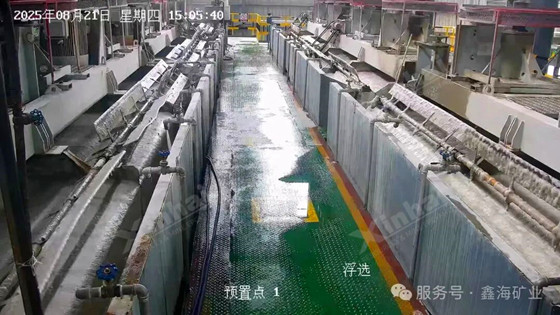
Flotation is the core of lithium mica recovery and traditionally the most labor-intensive stage. Operators previously relied on experience to adjust pulp levels and reagent dosages—an approach prone to response delays, overflows, or low-level (starved) conditions.
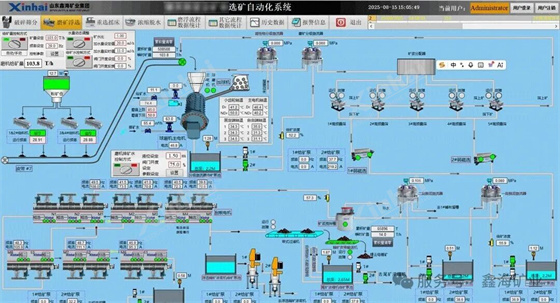
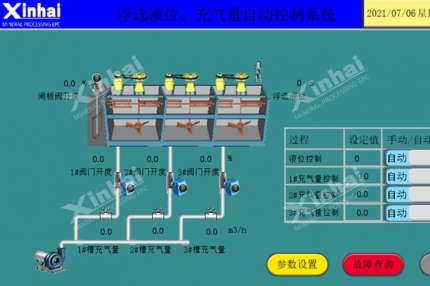
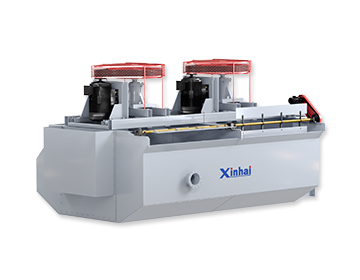
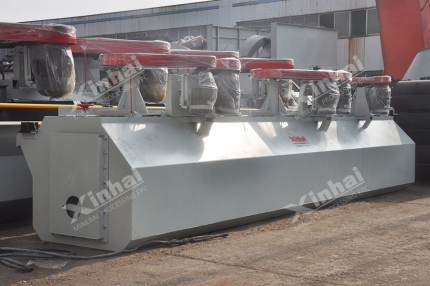
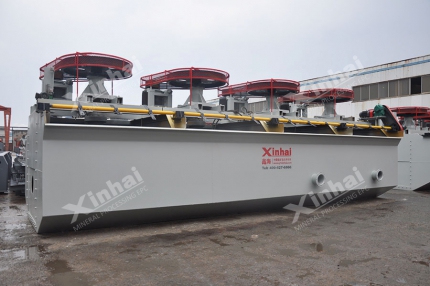
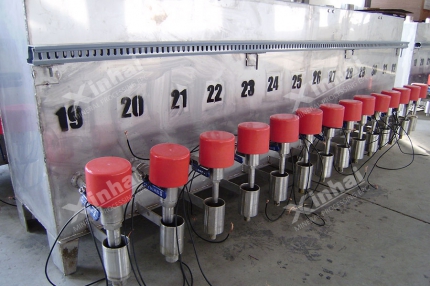
Real-time flotation cell level control
Following the upgrade, key parameters are monitored in real time, with automated control valves maintaining process stability. Operators are no longer required to make constant manual adjustments; the system now handles most regulatory control tasks. This has delivered more consistent recovery, reduced mechanical stress and unplanned downtime, lowered maintenance costs, and minimized reagent consumption—providing both economic and environmental benefits.
04Centralized Monitoring: Achieving Plant-Wide Operational Visibility
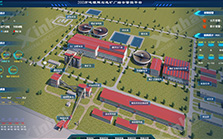
Beyond process automation, Xinhai Group established a plant-wide centralized monitoring and control platform.
Production areas, weighbridges, site entrances, fresh water facilities, and process water storage areas are all integrated into a unified monitoring network, providing comprehensive operational visibility.
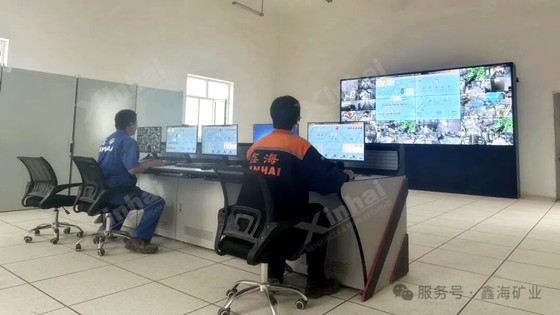
Centralized control room monitoring mineral processing operations across the plant
From the central control room, operators can simultaneously access real-time process information and live video feeds. This enables faster response to abnormal conditions and reduces the need for frequent field inspections.
As a result, plant management has evolved from experience-based coordination toward data-driven operational decision-making.
05Digital Enablement for Long-Term Operational Value
Automation is not the end goal of digital transformation. Its long-term value lies in the ability to generate reliable operational data that supports equipment management, process optimization, and strategic decision-making.
For the Inner Mongolia lithium mica project, the automation upgrade modernized operations and set up the digital infrastructure needed for advanced systems and decision-support tools.
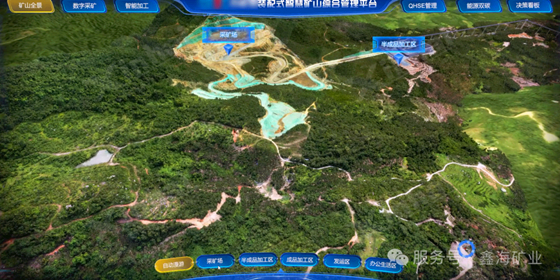
Xinhai Mining Group is enhancing digital capabilities across all stages of mineral processing, from process control to centralized management.
Looking ahead, Xinhai aims to strengthen its digital operations framework by providing scalable, optimized mine EPC+M+O solutions that enhance efficiency, sustainability, and long-term competitiveness in mining.
 marketing@xinhaimining.com
  0086 13810327080









 CHAT
CHAT MESSAGE