Ask any chromite project team how it intends to concentrate its ore and the first answer is almost always magnetic separation. It is the conventional route, it is well understood, and on paper it suits the mineral. In a recent phase test on a chromite sample from Oman, that default answer was neither assumed nor dismissed. It was tested at three field strengths, in single-stage and two-stage configuration, on the same sample against which every other route would later be measured. The results fell short of target. What redirected the flowsheet was that outcome — not a preference for gravity, and not a preference against the magnet.
Use the table of contents below to navigate through the guide:
01High-Grade Ore, But Recovery at Risk
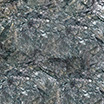
The sample came from a chromite project in Oman. Head grade was relatively high, at approximately 30% Cr, which changes the nature of the problem. On a high-grade ore the question is rarely whether a concentrate can be produced at all; it is how much of the value survives the circuit to report to that concentrate.
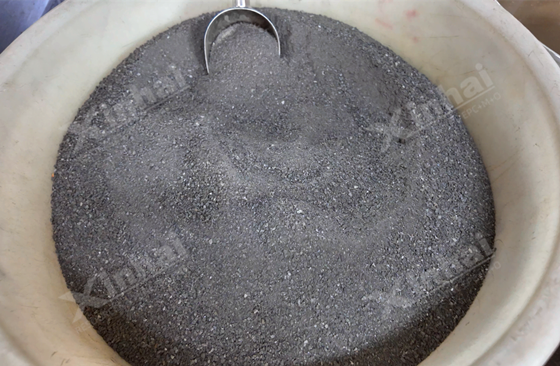
(Chromite ore sample)
Chromite is prone to overgrinding. Grind past the point at which the mineral is liberated and a growing share of the values reports to the fine fractions as slimes — material that conventional gravity equipment recovers poorly and that is easily lost to tailings. Each additional unit of grinding energy therefore carries a double cost: liberated chromite on one side, unrecoverable fines on the other. The test program was built around that trade-off: control overgrinding, limit slime losses, and raise recovery without giving up concentrate grade.
02Magnetic Separation Benchmarked and Ruled Out
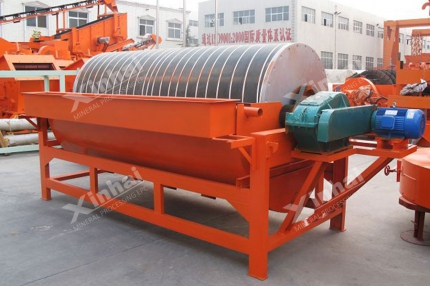
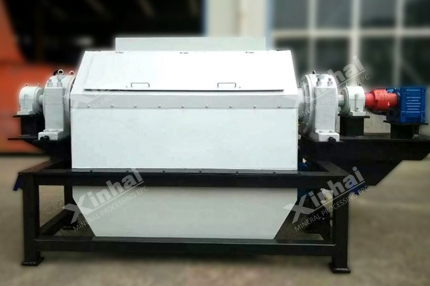
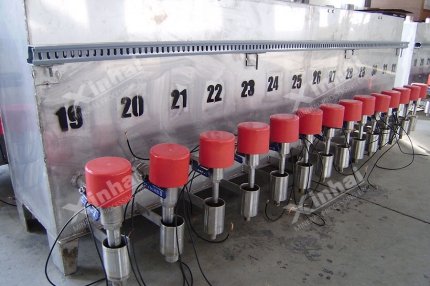
The first stage of the program was a benchmark, not a preference. Magnetic separation was run at 4,000, 5,000 and 8,000 gauss, and in two circuit configurations: single-stage separation, and a two-stage roughing–scavenging arrangement in which the scavenger re-treated the rougher tailings to recover values from locked particles.
.png "Chromite-ore-Magnetic-Separation-Exploratory-Test).png")
(Magnetic Separation in a Cooled Vertical Ring Magnetic Separator - Exploratory Test)
Across the conditions tested, magnetic separation on its own could not reach the target grade and recovery for this ore. The conclusion is not that magnetic separation does not work on chromite — it demonstrably does in many operations — but that for this sample, within the range of field strengths and stage configurations available to the circuit, it could not deliver the required result. Gravity separation became the direction for the remainder of the program.
A route is only ruled out credibly when it has been tested at the conditions where it would realistically be applied. Rejecting magnetic separation after one pass at one field strength would have proved nothing; the three-strength, two-configuration matrix is what gives the decision its evidential weight.
03Gravity Routes Compared on the Same Ore Sample
With gravity established as the working direction, the program moved from a single route to several running in parallel on the same material. Shaking table, spiral concentrator (spiral chute) and Knelson centrifugal concentrator all entered the comparison, alongside the magnetic results already on record.
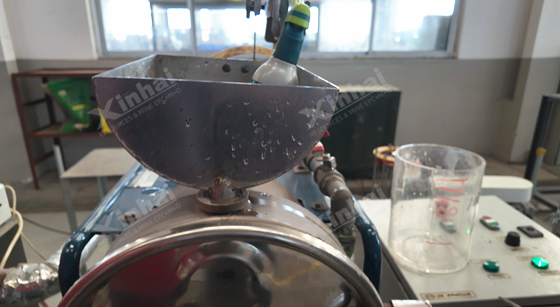
(Centrifuge Gravity Separation Test)
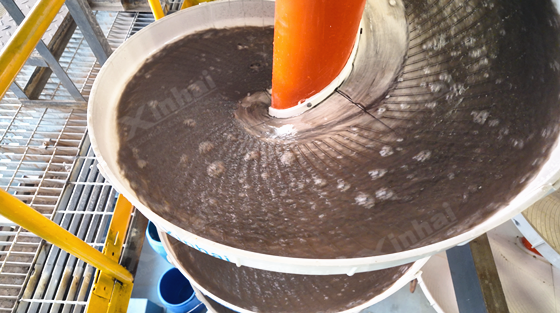
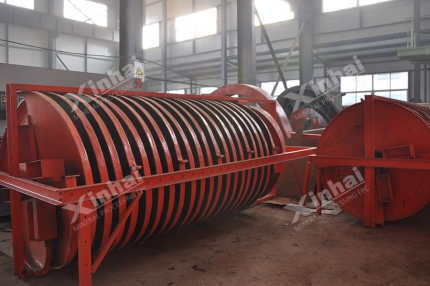
(Spiral Chute Gravity Separation Test)
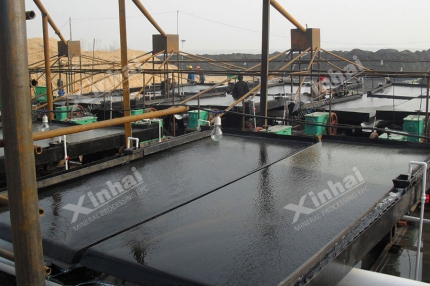
The table work was structured by size rather than run as one bulk pass. The sample was ground to 100% passing 32 mesh and then classified into 60, 100 and 200 mesh fractions, each treated separately on the shaking table, with middlings re-treated rather than discarded with the tailings.
The preliminary results: chromium grade was upgraded from approximately 30% Cr in the head to approximately 42% Cr in concentrate under the best conditions tested; the 100–200 mesh fraction responded best of the three; and of the equipment tested, the shaking table gave the strongest enrichment. The upgrade says the route works; the size band says where.
Two things in that result are worth separating. The first is the figure: about 12 percentage points of upgrade on a sample that already carried a relatively high head grade, achieved by gravity alone. The second is where that figure came from. It did not come from a single bulk test but from classifying the ground sample and letting each size fraction report its own response. The 100–200 mesh result locates where the table works best on this ore — precisely the information a flowsheet needs and a bulk test cannot supply.
04Recovering Fine Chromite from -200 Mesh Slimes
The classified work also exposed the limit of the table. The -200 mesh fraction, the finest of the three, is where slimes concentrate and where gravity equipment loses efficiency. Slimes are unavoidable in grinding; losing them to tailings is not. Rather than accept that fraction as a loss, the program introduced a Knelson centrifugal concentrator to re-treat it.
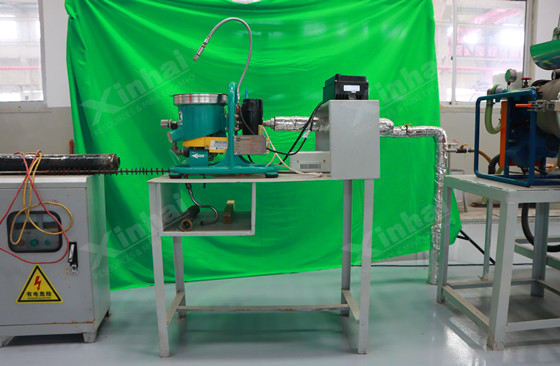
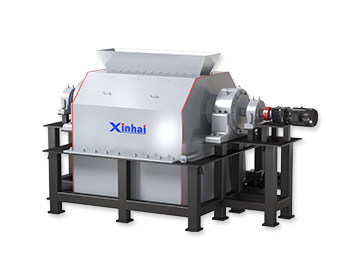
(Knelson centrifugal concentrator)
The objective at this stage is specific: recover fine chromite from the slime fraction, reduce what reports to tailings, and lift overall circuit recovery. This is the part of the flowsheet that addresses overgrinding directly — the fines are not prevented; they are captured. Test work on this fraction is continuing; recovery figures will be reported with the completed program rather than inferred from the table results.
05From Single-Device Tests to a Combined Flowsheet
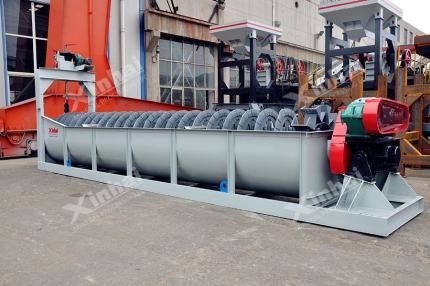
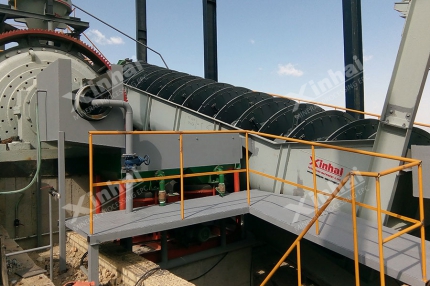
Single-device results do not make a flowsheet. The final stage of the phase test scaled the gravity route up to a larger sample mass, running approximately 20 kg through a spiral chute to establish roughing behavior.
On that basis the team proposed a combined circuit: spiral chute roughing — shaking table or jig cleaning — Knelson re-treatment of the tailings. The overall process direction is summarized as staged grinding, classified gravity separation, and centrifugal recovery of slimes.
Grinding control runs through all three stages. The aim is to reach liberation without generating more fines than the circuit can recover, which means controlling both grinding time and product size rather than grinding to a single target size and accepting the slimes it generates. The combined circuit is proposed for verification in the next round of testing: it is a tested direction, not yet a commissioned flowsheet.
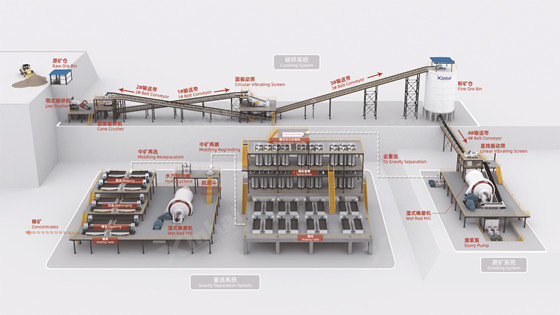
(500 t/d Chromite Gravity Separation Process)
06A Data-Driven Test Methodology for Difficult Ores
Three features define the method behind this program. Every route is tested on the same sample, so results are comparable rather than sequential guesses. Every condition is varied deliberately — three field strengths, two magnetic configurations, three size fractions, four equipment types — so that each rejection and each selection has a data point behind it. And the flowsheet converges on the ore, rather than the ore being fitted to an equipment list.
This matters more now than it did a few years ago. The samples reaching Xinhai's beneficiation laboratory have shifted from predominantly single-ore programs toward polymetallic and refractory ores, where the conventional first answer is more often wrong and where the cost of a wrong flowsheet is paid over the life of the plant. Process fit — the ability to establish what a specific ore actually responds to — has become the core capability, and comparative testing is how that capability is delivered.
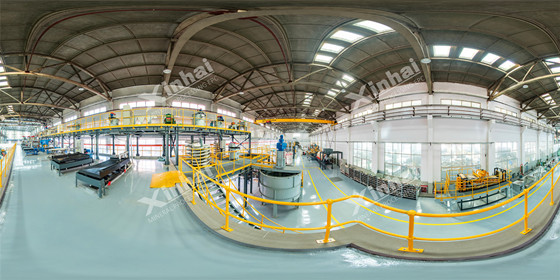
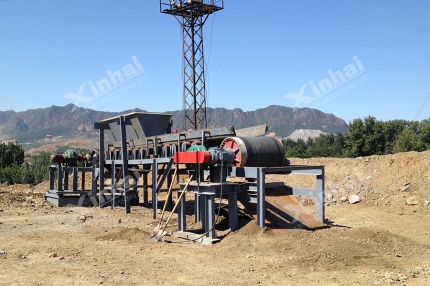
(Mineral Comprehensive Utilization Test and Pilot Base)
Magnetic separation was not the answer for this chromite sample. The conclusion is worth very little on its own; it is the way it was reached that gives it weight — three field strengths, two configurations, and gravity routes measured against the same material. Ore characteristics determine the process. An equipment list does not.
Have a chromite or polymetallic sample that won't respond to the conventional route?
Xinhai Mining's beneficiation test service runs comparative programs of this kind and delivers the full test report, including the data behind each flowsheet decision. Send us your sample and we'll come back with a test proposal.
07Frequently asked questions
Why can magnetic separation underperform on some chromite ores?
In this project, magnetic separation was tested at 4,000, 5,000 and 8,000 gauss in both single-stage and two-stage roughing–scavenging configurations, and could not reach the target grade and recovery on its own. Whether magnetic separation suits a given chromite ore depends on the characteristics of that ore and should be established by test work rather than assumed from the mineral type.
What is overgrinding, and why does it matter in chromite beneficiation?
Overgrinding is grinding beyond the point required for liberation. In chromite it generates fine slimes that conventional gravity equipment recovers poorly, so values report to tailings and overall recovery falls. Controlling grinding time and product size, together with centrifugal recovery of the finest fraction, is how the circuit limits that loss.
What does a comparative beneficiation test program involve?
The same sample is tested across multiple equipment types and operating conditions — here, magnetic separation at three field strengths and two configurations, plus shaking table, spiral chute and Knelson concentrator routes — with each size fraction evaluated separately. The flowsheet is then built from the results rather than selected in advance.
Which flowsheet did this test program converge on?
A combined circuit of spiral chute roughing, shaking table or jig cleaning, and Knelson re-treatment of tailings, under an overall direction of staged grinding, classified gravity separation and centrifugal recovery of slimes. It is proposed for verification in subsequent test work.
 marketing@xinhaimining.com
 0086 13810327080








 CHAT
 MESSAGE