Use the table of contents below to navigate through the guide:
01Why Many Phosphat Ore Projects Underperform?
Many medium- to low-grade phosphate ore projects fail to achieve expected recovery and concentrate grade—not because of equipment limitations, but due to inappropriate flotation process selection.

In practice, ores that appear similar often require completely different flotation strategies. Without a clear understanding of mineralogical characteristics and flotation mechanisms, even well-designed plants can suffer from:
There is no universal flowsheet for phosphate ore beneficiation—each ore requires a tailored solution.
02Why Phosphate Ore Is Difficult to Process
Medium- to low-grade collophosphate (sedimentary phosphate rock) is inherently complex due to:
1. Fine Dissemination and Complex Intergrowth
Liberation requires grinding to 85–90% passing 200 mesh
Overgrinding leads to slime coating and entrainment, reducing selectivity
☞Operational impact: Difficult separation and unstable flotation performance
2. Strong Interference from Impurity Ions
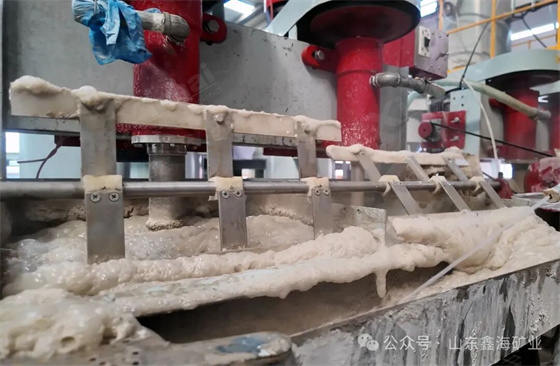
Magnesium ions (Mg²⁺) significantly affect flotation:
In addition, sesquioxides influence the MER (MgO/P₂O₅ ratio), limiting the production of high-grade concentrate suitable for downstream applications.
☞Operational impact: Reduced recovery, higher reagent consumption, and stricter process control requirements
03Direct vs Reverse Flotation of Phosphate Ore
Process Type | Floated Mineral | pH Range | Collector Type | Applicable Ore | Limitations |
Direct Flotation | Phosphate | 9–10 (weakly alkaline) | Fatty acids (e.g., sodium oleate) | Siliceous phosphate (high SiO₂, MgO<1%), relatively coarse feed | Low efficiency for high-Mg ores, high reagent consumption, high-viscosity froth, poor dewatering performance |
Reverse Flotation | Gangue minerals | ~5.0 (acidic) or ~9.0 (alkaline) | Amines (e.g., dodecylamine) | Calcareous (Mg removal) or siliceous (SiO₂ removal) collophosphate | Requires precise control of pH and reagent scheme |
Key takeaway:
☞Engineering insight: Selecting the wrong flotation direction is one of the most common causes of poor plant performance.

04Optimized Flowsheets for Complex Phosphate Ores
Single-stage flotation is rarely sufficient. Combined processes are essential for achieving both high recovery and concentrate grade.
1. Direct–Reverse Flotation (De-silication → De-magnesiation)
Applicable to: Coarser pre-concentrates (–0.074 mm accounting for 40–60%)
Key parameters:
Performance:
P₂O₅ grade: ≥32%
Recovery: ≥93%
★Value for your project: Provides a balanced solution between recovery and operating cost, making it ideal for projects targeting stable returns with controlled reagent consumption.
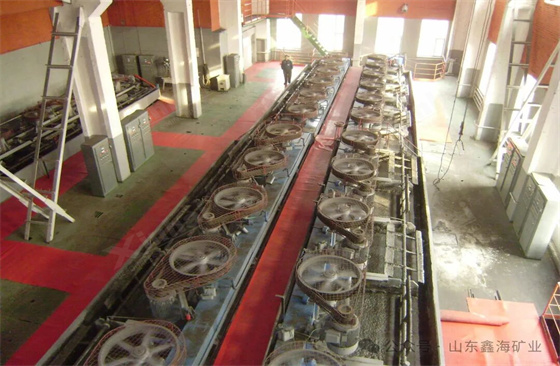
2. Reverse–Direct Flotation (De-magnesiation → De-silication)
Applicable to: Fine-grained ores (–0.074 mm >80%) with high slime content
Key parameters:
★Value for your project: Improves flotation selectivity in fine ores by mitigating slime effects, resulting in more stable operation and improved recovery.
3. Double Reverse Flotation
Applicable to:
Refractory ores with:
Control conditions:
★Value for your project: A necessary solution for complex ores where conventional processes fail, enabling high-grade concentrate production at the cost of higher process complexity.
05Common Process Selection Mistakes (and How to Avoid Them)
Many phosphate ore projects underperform due to avoidable mistakes:
Applying direct flotation to high-Mg ores → poor selectivity
Ignoring slime effects in fine-grained ores → unstable flotation
Using generic reagent schemes without ore-specific optimization
Underestimating the impact of Mg²⁺ and pH control
These are not equipment issues—they are process selection issues.
☞Engineering reality: Correct process selection at the design stage can determine long-term plant performance.
06Testwork Is the Decisive Step
Process selection often has a greater impact than equipment configuration.
Even ores with similar grades can behave very differently in flotation. Without systematic metallurgical testwork, process design becomes high-risk.
Essential testwork includes:
Mineral composition and dissemination analysis
Grinding fineness vs. P₂O₅ distribution
Liberation characteristics
Reagent scheme optimization
☞What this means for your project:
From engineering experience, investing in testwork upfront significantly reduces post-startup adjustments and ensures stable long-term operation.
07Selected Project Experience
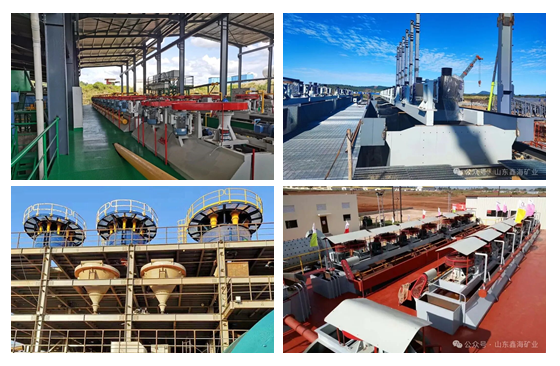
Xinhai Mining has delivered a wide range of concentrator projects worldwide:
Uganda: 720 t/d Phosphate Concentrator
Guinea: 15,000 t/d Gold Concentrator
Zimbabwe: 2,000,000 t/a Lithium Concentrator
Nigeria: 1,000 t/d Copper-Silver Concentrator
Work with Xinhai Mining
Selecting the right flotation process is critical to the success of any phosphate ore project.
With extensive experience in complex ore beneficiation, Xinhai Mining provides:
Metallurgical testwork and analysis
Customized process design
Full EPC+M+O solutions
On-site commissioning and optimization support

We help you:
Identify the most suitable flotation strategy for your ore
Improve recovery and concentrate grade
Reduce reagent consumption and operating costs
Achieve stable and predictable plant performance
Start Optimizing Your Phosphate Project
Whether you are evaluating a new project or improving an existing operation, our engineering team is ready to support you with tailored solutions.
☞Contact Xinhai Mining today to discuss your project
 marketing@xinhaimining.com
  0086 13810327080




 CHAT
CHAT MESSAGE