Efficient dewatering and tailings management are critical for modern, sustainable mining operations. Mineral processing plants generate large volumes of slurry that must be dewatered before tailings disposal, dry stacking, or water recycling. Therefore, selecting the right solid-liquid separation technology is essential for maximizing water recovery, minimizing environmental impact, and reducing overall operating costs.
Thickeners and filter presses are key dewatering technologies in mineral processing and tailings management. This article compares their operating principles, advantages, and limitations, and explores how they can be effectively combined for efficient tailings dewatering.
Use the table of contents below to navigate through the guide:
01Thickening vs Filtration in Mineral Processing
Before comparing equipment, it is important to understand the difference between thickening and filtration in the dewatering process.
In most mineral processing plants, dewatering is performed in stages:
Slurry → Thickening → Filtration → Dry stacking or Tailings storage
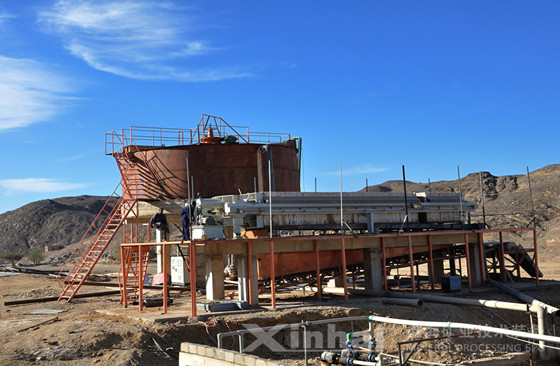
Thickening is typically the primary dewatering stage, where bulk water is removed through gravity sedimentation, increasing slurry density and recovering process water.
Filtration is the final dewatering stage, where mechanical pressure removes remaining water to produce low-moisture filter cake suitable for dry stacking or transportation.
Therefore, thickening and filtration are not competing processes but complementary stages in a complete tailings dewatering system.
02Understanding Thickeners: High-Volume Sedimentation
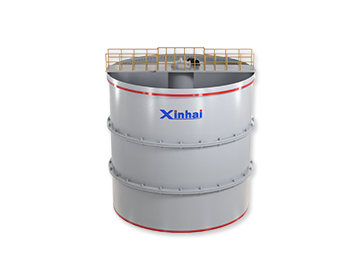
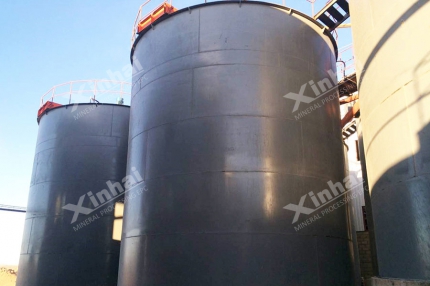
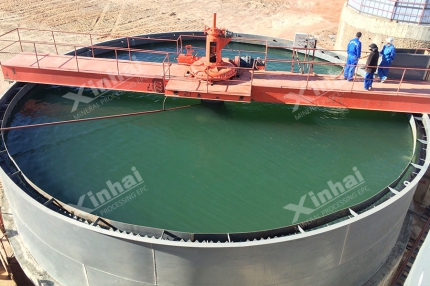
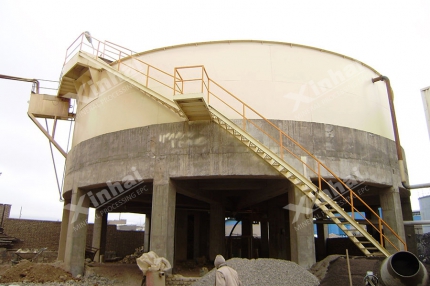
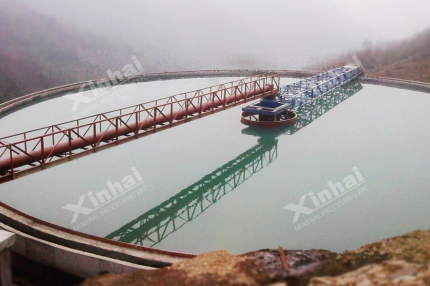
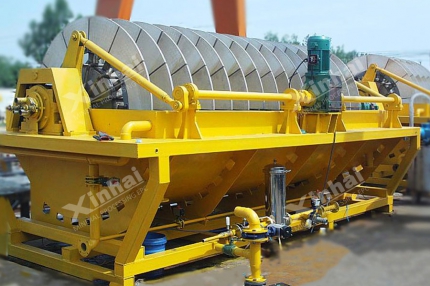
Thickeners are large, continuous-operation tanks that use gravity sedimentation to separate solids from liquids and are widely used for tailings thickening and concentrate thickening.
Working Principle
Tailings slurry is fed into the center of the tank. Chemical additives called flocculants are usually introduced to bind fine particles into larger, heavier clumps (flocs), accelerating the settling process. The solids settle to the bottom and are discharged as underflow, while clarified water overflows the peripheral weir and can be immediately reused in the plant water system.
In most mineral processing plants, thickeners are used as the primary dewatering stage, focusing on bulk water recovery and slurry concentration rather than producing dry solids.
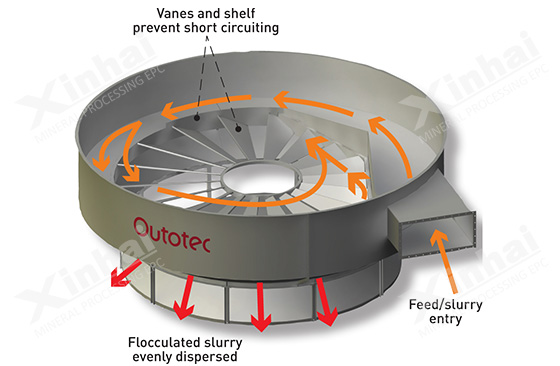
Xinhai’s Advanced Solutions
Xinhai Mining has significantly advanced thickener technology to maximize settling efficiency.
Efficient Thickener:
Featuring optimized feedwell designs and automated flocculant dosing, Xinhai High-Rate Thickeners offer 3–5 times the capacity of conventional units while producing exceptional overflow clarity (often<100 ppm).
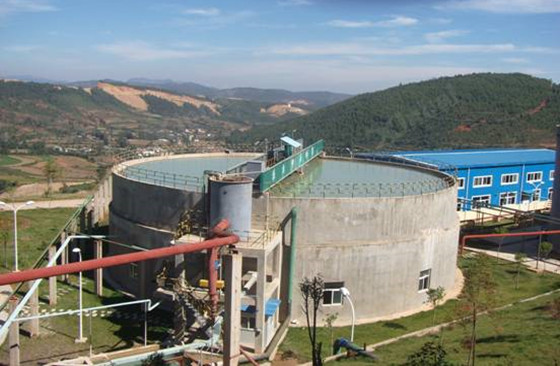
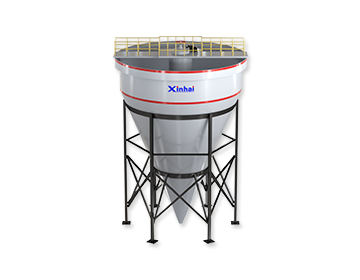
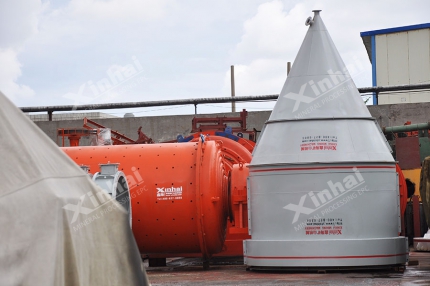
Deep Cone Thickener (Paste Thickener):
Utilizing a tall, steep cone geometry to increase the compression zone, these units produce extremely high underflow concentrations (>60–70% solids), making them ideal for paste backfill and high-density tailings disposal.
★Pros: High capacity, continuous operation, low operating cost (OPEX), efficient large-scale water recovery.
☆Cons: Flowable underflow (40–60% solids) still contains significant water and typically requires a large installation footprint.
03Unveiling Filter Presses: High-Pressure Filtration
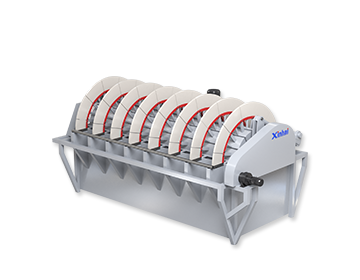
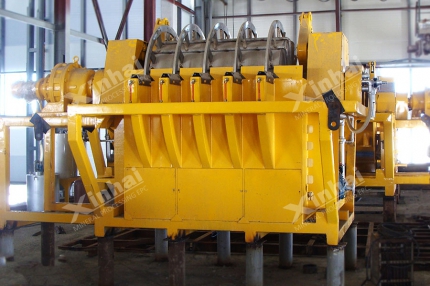
A filter press is a batch-operation machine that uses mechanical pressure to force liquid through a filter medium, producing dry, stackable filter cakes.
Working Principle
Slurry (often thickener underflow) is pumped into chambers formed between recessed plates covered with filter cloth. High pressure forces the liquid (filtrate) through the cloth, leaving solid particles trapped inside the chamber. After filtration, the press opens and discharges the solid cakes.
Filter presses are typically used as the final dewatering stage when low moisture content or dry stacking tailings are required.
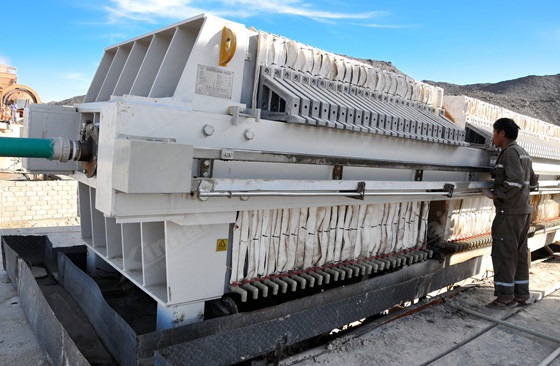
Xinhai’s High-Efficiency Solutions
Xinhai filter presses are engineered for durability, automation, and maximum moisture reduction.
Automated Features:
Fully automated Xinhai filter presses include automatic plate shifting, cake discharge, and cloth washing, minimizing labor requirements and reducing cycle times.
Membrane Filter Press:
For difficult materials, membrane presses apply an additional squeeze to the filter cake, achieving the lowest possible moisture content.
★Pros: Highest solid concentration (75–85% solids, 15–20% moisture), produces stackable cake suitable for dry stacking, maximum water recovery.
☆Cons: Batch operation, higher capital (CAPEX) and operating costs (OPEX) per ton, and smaller capacity per unit compared to thickeners.
04Comparative Analysis: Key Performance Metrics
The choice between a thickener and a filter press depends on the desired end product, tailings disposal method, and project conditions.
Metric | Thickener | Filter Press |
Separation Force | Gravity (+ Flocculants) | Mechanical Pressure |
Operation | Continuous | Batch |
Primary Output | Pumpable Slurry (40-65% Solids) | Stackable Solid Cake (15-20% Moisture) |
CAPEX | High (for equipment & civil) | Moderate (per unit) |
OPEX | Low | Moderate to High |
Water Recovery | Bulk recovery (fast) | Maximum recovery (completes separation) |
The critical difference:
Thickeners produce a flowable slurry, suitable for further processing, pumping, or conventional tailings storage facilities. Filter presses produce a non-flowable solid cake, which is essential for dry stacking tailings, reducing geotechnical risks and minimizing environmental footprint.
05The Xinhai Synergy: A Powerful Combination
Relying on a single technology is rarely the most efficient approach. Xinhai Mining recommends a highly effective two-stage solution that combines both technologies.
The Integrated Process:
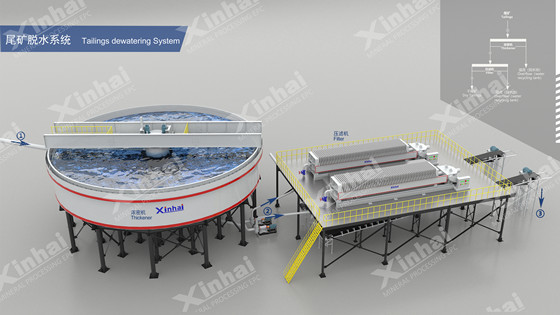
Stage 1: Primary Thickening (Xinhai High-Rate Thickener)
The entire tailings stream is rapidly concentrated from 10-20% to 50-60% solids, recovering the bulk of process water efficiently.
Stage 2: Final Filtration (Xinhai Filter Press)
The dense thickener underflow is fed to the filter press. Because the feed is pre-concentrated, filtration time, energy consumption, and wear on filter cloths are drastically reduced. The press achieves the final goal: a 15-20% moisture cake ready for dry stacking.
Advantages of the Integrated Approach
Optimized Costs: Combining technologies results in a smaller thickener and fewer filter presses, optimizing both CAPEX and long-term OPEX.
Sustainable Disposal (Dry Stacking): The produced filter cake allows for dry stacking, eliminating tailings ponds and facilitating land reclamation.
Maximum Water Closed-Loop: This combined approach can recover over 90% of process water, crucial in arid regions.
06How to Choose Between a Thickener and a Filter Press
The comparison is not whether to use a thickener or a filter press, but how to use them together. Thickeners excel at high-volume, continuous water recovery, while filter presses are necessary for maximum dryness and dry stacking.
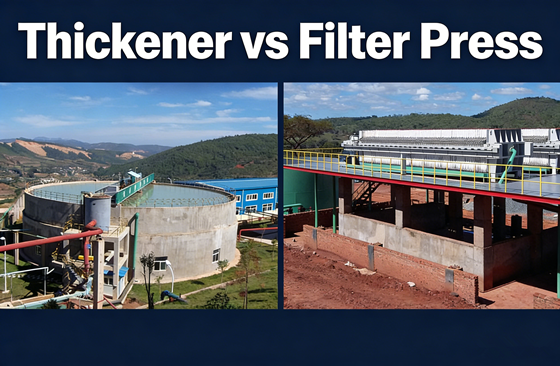
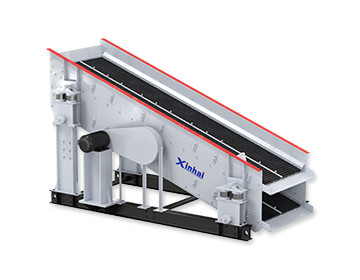
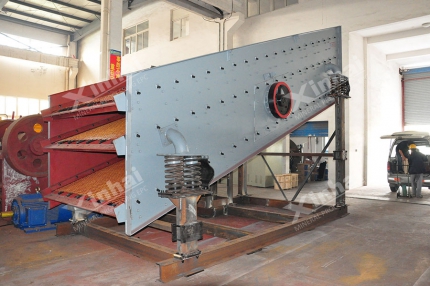
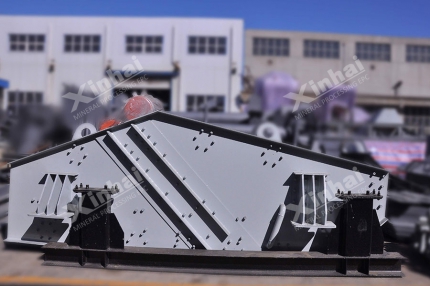
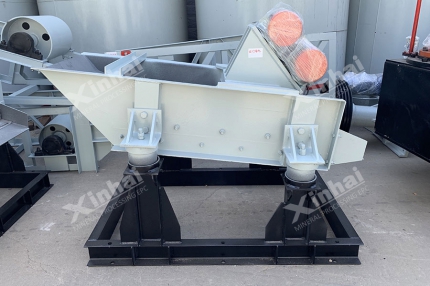
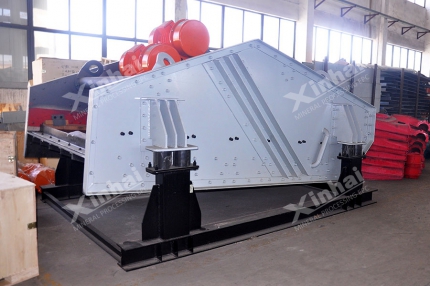
As a leader in Mineral Processing EPC+M+O services, Xinhai Mining does not just sell equipment; we provide tailored solutions. Our engineers design customized circuits, utilizing Xinhai High-Rate Thickeners, Deep Cone Thickeners, and High-Efficiency Filter Presses (often alongside Xinhai High-Efficiency Dewatering Screens for coarser fractions), to deliver the lowest total cost of ownership and meet the highest environmental standards.
Contact Xinhai Mining today to discuss your tailings management challenges.
 marketing@xinhaimining.com
  0086 13810327080





 CHAT
CHAT MESSAGE