On the day a processing plant takes its first ore, the cameras focus on equipment. The ball mill starts, the first truck of ore enters the bin, and grade and recovery begin to stabilise. Everyone exhales. That is the visible part.
What stays out of frame determines whether the plant still runs steadily three years later. Where will the spare parts come from? When the circuit drifts, who decides on site whether to change the reagent scheme or the grind size? After an operating crew turns over, will the new team follow the same procedures? On the next expansion, must the team relearn customs paperwork, local standards and construction practice? These questions decide the working life of an asset, yet they rarely appear in commissioning photographs.
Xinhai's EPC+M+O full-chain service covers more than 100 countries and regions. The wider that record, the clearer one distinction becomes: completing a plant and handing it over is not the same as continuing to work in one market. The first depends on delivery capability. The second depends on whether that capability stays.
Use the table of contents below to navigate through the guide:
01Ore and Site Conditions Vary Across Markets
Winning contracts across many countries looks like scale. At site level, scale does not automatically produce efficiency.
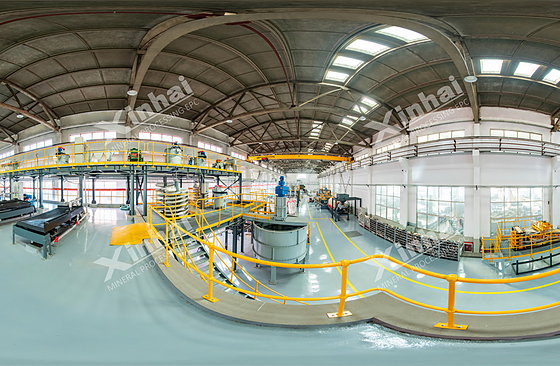
Ore does not behave the same way because the same company built the plant. Xinhai's service page states the point plainly: no two mines are alike, and each requires its own process flowsheet. Testwork therefore precedes design. The company runs a CNAS-accredited laboratory and a pilot testing centre of about 3,000 m² covering more than 70 ore types; mineral processing testwork and pilot testing feed the process design. The aim stays consistent: build the flowsheet from this ore sample, not from the drawings of the last plant.
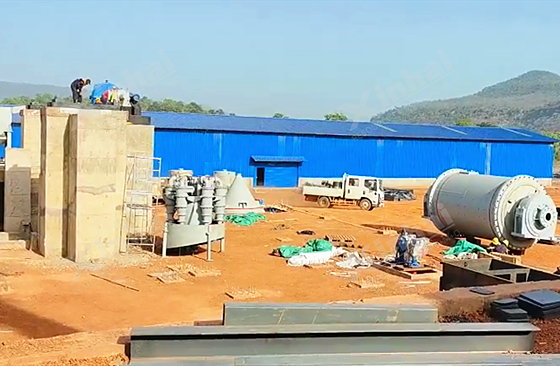
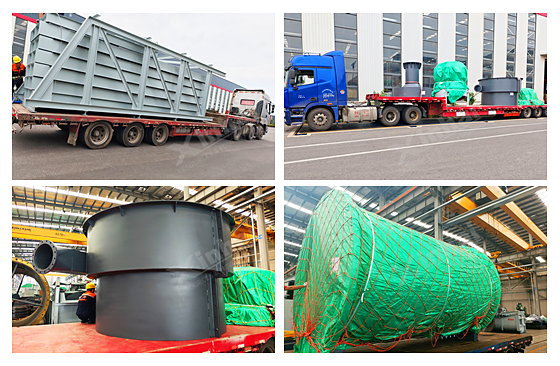
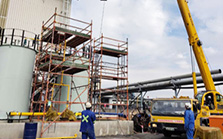
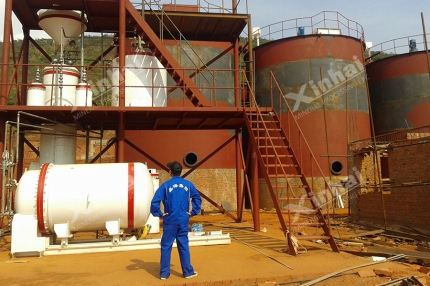
Conditions beyond the equipment do not transfer either. Each country sets its own standards and customs procedures, its own document formats and translation requirements, its own labour and construction practice, and its own rainy seasons, roads and power supply. For the 1,000 t/d gold plant installation in Guinea, Xinhai shipped equipment in 20 × 40 ft high-cube, 12 × 40 ft open-top and 2 × 40 ft flat-rack containers, with oversized components shipped separately. Installation ran from early April to the end of July 2026. Commissioning still awaits site water and power. The company planned every element around one project, one cargo list and one site; a different country requires a different plan.
If every market entry starts from zero, projects accumulate as numbers and experience stays at each site. The more projects a company runs, the more its teams disperse, and the less it retains. A wide footprint gives Xinhai the ability to see opportunities. It does not, by itself, give the company the ability to develop them.
02Organising Delivery Around Regional Teams
Xinhai later changed how it allocates resources. Instead of moving people, equipment and services one project at a time, the company organises that capability around regions.
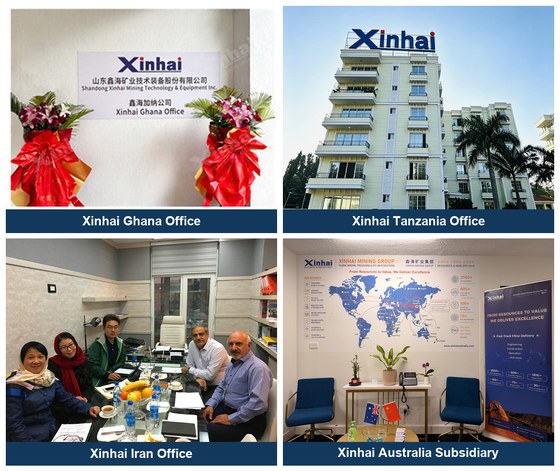
The shift did not happen at once. Xinhai opened overseas offices in Sudan and Tanzania in 2014 and added Indonesia and Zimbabwe in 2015, followed by Iran in 2016. The company then extended its services from design, supply, and installation to commissioning and operational support, forming what it now calls its EPC+M+O full-chain service. More recently, it has established wholly owned subsidiaries in Ghana, Zimbabwe and Tanzania as hubs for West, Southern and East Africa.
The change sits in how the company divides delivery stages. Mineral processing testwork and process design set the flowsheet. Packaged equipment supply determines what the site receives. Installation and commissioning turn the design into an operating system. The operation stage handles spare parts, consumables, process upsets and later expansions. Each stage involves different responsibilities, interfaces and records: testwork works from ore samples and test reports, supply from equipment lists and packing lists, installation from construction and commissioning records, and expansion returns to ore characteristics and process calculations. Organising these stages regionally lets one set of interfaces serve several projects in the same market, instead of redefining it for every contract.
A regional record shows its value when the company works repeatedly in one market.
The 1,200 t/d gold cyanidation plant in Mexico came from a client for whom Xinhai had delivered a 1,500 t/d copper-lead-zinc and gold-silver project in 2017. On the second contract, the two sides did not have to renegotiate everything from scratch: how standards align, how documents move, how installation coordinates, and who to call when a problem appears. A client that signs again says more about the first delivery than any claim in a brochure.
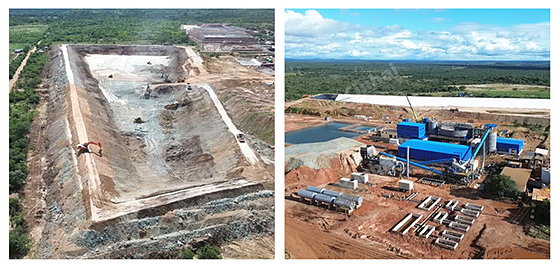
Zimbabwe shows the same pattern. Xinhai signed a 2 million t/a spodumene project in June 2022 and reported trial production one year later. In May 2026, its 500 t/d gold EPC+M+O project in Zimbabwe achieved first ore and moved into stable production. That milestone rests on the continuous handover between civil works, packaged equipment supply, installation and commissioning; a change in site conditions at any one stage rewrites the schedule. The two plants treat completely different ores under separate contracts. Yet repeated entry into one country gives the company a working base for the tasks that consume the most time: customs routes, construction resources and local coordination.
This is what regional organisation means in practice. It does not mean winning a few more orders in one country. It means a team does not have to learn the same lesson twice.
03Building Local Supply Chains and Capability
Companies can buy equipment, copy drawings and look up process parameters in the literature. They cannot buy the understanding a team builds in a region over several years.
In many emerging mining countries, owners face more than a technical problem. Local practice may lack mature design codes for mineral processing plants, contractors capable of full-scope construction, and a complete spare-parts supply chain. Owners cannot assemble a working capability from separate suppliers: testwork, design, supply, installation, commissioning and operation all affect grade and recovery, and a gap in any one of them shows up in both. A company that carries the full chain supplies the industrial support that the local market has not yet built.
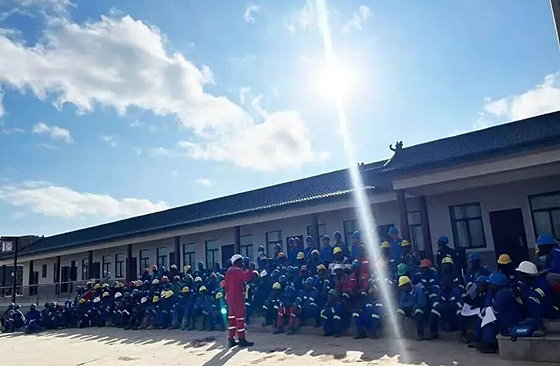
Building that support takes time. It may take the form of a local workforce: translators, customs clerks and plant operators who know one another's routines. It may take the form of a spare-parts and consumables system that knows which items must sit in country and which can wait for a vessel. It may take the form of trust passed between owners, which gradually shortens the interval between contract signature and first ore. On overseas projects, Xinhai's local teams number in the hundreds, and some projects have cut the period from signature to trial production by more than 30 per cent. Companies do not achieve that by adding equipment. They achieve it by keeping people in place long enough.
The difficulty is that these investments do not show up quickly in a set of accounts. Maintaining a local team, holding parts that may not be needed for months, and rebuilding a document set to local practice all add cost in the short term. They return value only when a second and a third project arrive in the same market. Regional organisation therefore cannot be completed by a single decision. It requires a company to place people and capability in a market before the orders exist.
That patience forms part of the strategy.
04Supporting Mines Throughout Their Operating Life
People discussing international expansion often ask which country comes next. For Xinhai, the more useful question is how it stays in a market.
Under a project-based structure, capability follows the contract; when the contract ends, the team leaves. Under a regional structure, capability follows the place; when the project ends, testwork, spare parts, operational support and people who know the country remain. The first structure completes projects. The second builds familiarity with a market. This is not a retreat, and Xinhai has not withdrawn from other markets: its service coverage still spans more than 100 countries and regions. The network has simply moved from being able to reach a site to being able to respond over time.
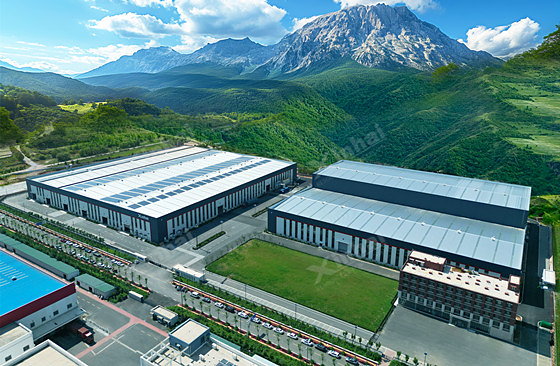
Mining runs on long timelines. A mine takes many years to move from exploration to production, and a processing plant then runs for decades. Serving an asset with a decades-long life at the pace of a single delivery contract does not fit. Xinhai places testwork, spare parts and commissioning capability closer to the mine, so the same people accompany a plant through commissioning, ramp-up and expansion.
Xinhai built its map one project at a time over two to three decades. What will now define the company's position is not how many more points it can add, but how many of those points become places where it can keep working.
 marketing@xinhaimining.com
 0086 13810327080










 CHAT
 MESSAGE