A flowsheet is not picked from an equipment list. On difficult ores, it is read out of the mineralogy report, one route at a time. A recent test program at Xinhai's laboratory on an oxide copper ore from Congo (DRC) shows the full chain: a mineral analysis that quantified exactly why the ore was difficult, flotation trials that confirmed the difficulty, gravity tests that recovered only part of the copper, and leaching work that settled the question. The decision point was a single figure - 18.88% combined oxide copper, the fraction of copper that conventional flotation chemistry struggles to reach. This article follows the decision as it was made, including the two routes that had to be rejected first.
Use the table of contents below to navigate through the guide:
01What the Mineralogy Showed
The ore graded 4.45% Cu. Mineralogical analysis divided the oxide copper into two fractions: 61.80% free oxide copper and 18.88% combined oxide copper - the portion of copper tied up in mineral species that respond poorly to conventional flotation chemistry. The copper minerals themselves were identified as pseudomalachite and a manganese-bearing copper oxide, both recognized as difficult oxide copper species. In other words, the ore's difficulty was not an assumption carried in from elsewhere; it was measured, mineral by mineral, before any route was tested.
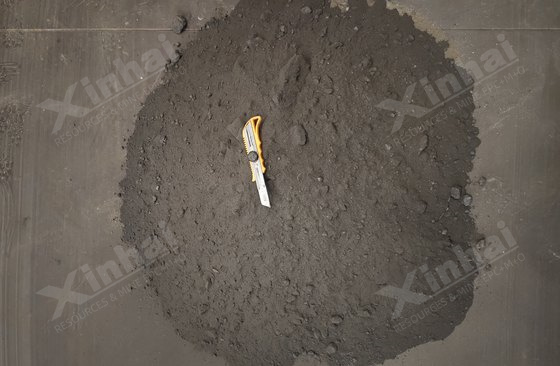
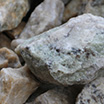
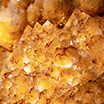
oxide copper ore sample
The gangue presented a second, independent problem. Clinochlore, a chlorite-group mineral, was present in high proportion. After grinding it slimes readily, and the resulting fine particles interfere with the separation step and slow pulp filtration downstream. A flowsheet built around fine grinding and surface-selective processes would therefore be working against the ore's own physics - a point the route trials went on to confirm.
Before a single flotation cell was run, the analysis had already set the constraints: a substantial share of the copper sat in species that flotation collects poorly, and the gangue would punish any process that depended on clean, well-dispersed fine particles. What remained was to test how far each conventional route could go against those constraints.
02Testing Three Routes on the Same Ore
The flotation exploration covered multiple collector and modifier schemes. None achieved a workable separation. Two mechanisms worked against it at once: the clinochlore slimes disturbed the separation environment, and copper ions released into the pulp activated the gangue minerals, so reagents collected gangue along with the copper minerals. Concentrate grade improved only marginally across the trials, and substantial copper reported to tailings. Flotation was excluded as a main process.
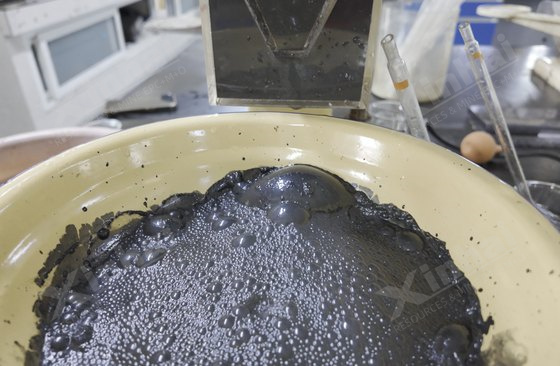
Dark flotation froth with fine bubbles in a laboratory test pan
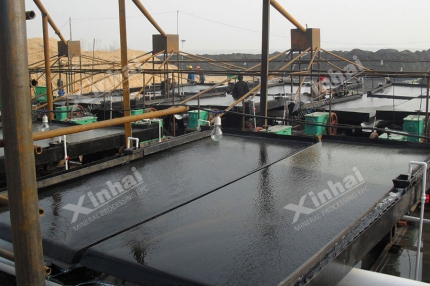
The second route applied gravity concentration to classified feed. The ore was ground to 70% passing 200 mesh, classified at 200 mesh, and the coarse and fine fractions were treated separately on shaking tables. The coarse fraction responded: the tables produced a concentrate of relatively high grade from the coarse material. The fine fraction did not - fine copper recovery was poor. Overall copper recovery stayed limited, so gravity could enrich part of the ore but could not carry the plant on its own. Its role was redefined as auxiliary pre-concentration ahead of the main recovery step.
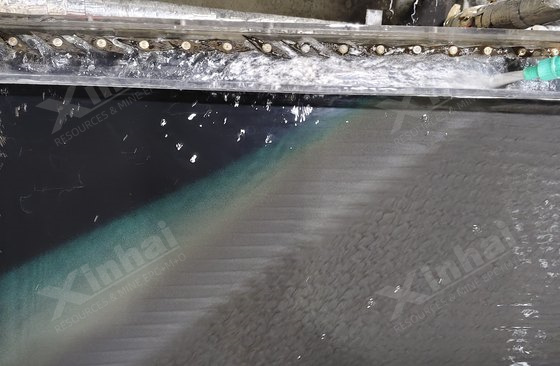
Shaking table in operation showing banded heavy-mineral concentrate streaks
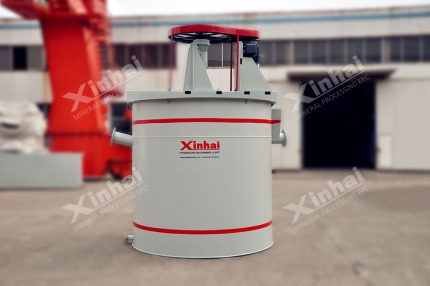
The third route bypassed fine grinding altogether. Agitation leaching was applied directly to the minus-2 mm crushed product. At room temperature, the copper leaching rate held steady above 89.37%. Set against the two preceding results, this was decisive: the process recovered copper that flotation could not collect and gravity could not catch, and it did so without the grinding stage that generates the problematic slimes.
Three routes, one ore, one decision: exclude flotation, downgrade gravity, commit to leaching.
03Why Room-Temperature Leaching Won
Leaching solved the recovery question, but the operating question remained: at what cost? Heating the leach raised the copper leaching rate to 96.63%. The gain was real but not free. Heated operation raises reagent consumption, energy demand, and the corrosion-resistance requirements applied to vessels and pipework - three cost categories that rise together with the temperature.
The recommendation therefore compares the two figures against their operating consequences, not in isolation. Room-temperature leaching stabilizes above 89.37% with conventional equipment and moderate reagent and energy demand. Heated leaching adds roughly seven percentage points of leaching rate in the laboratory - and adds cost in three categories at once. On the evidence of this test program, the room-temperature route was prioritized: it recovers most of the leachable copper at a materially simpler operating point. The economic advantage over heated operation still has to be confirmed against actual reagent consumption data and the engineering conditions of a specific project. The test program establishes the technical comparison; it does not establish plant economics.
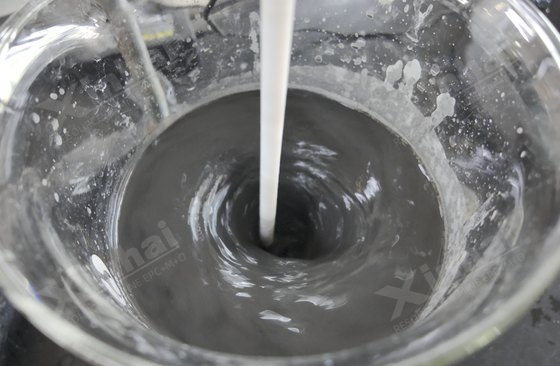
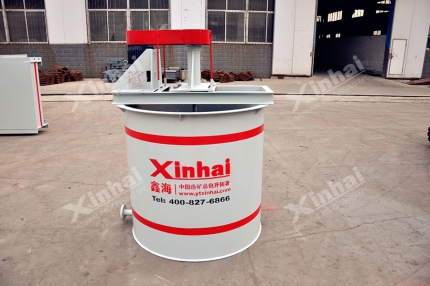
Glass beaker of dark slurry under a laboratory agitation leaching stirrer
The resulting flowsheet assigns each route the role its own results earned: gravity concentration as auxiliary pre-concentration of the coarse fraction, and room-temperature agitation leaching of the minus-2 mm product as the main recovery process.
The question at the head of this article - how to select a flowsheet for an ore of this type - resolves into a sequence, not a desk decision: quantify the mineralogy, test each candidate route against it, and let the results exclude, downgrade or confirm each option. On this ore, that sequence removed flotation, reduced gravity to a supporting role, and settled on room-temperature agitation leaching. Applied to the next ore sample, the same sequence is what a mineral processing test is for.
Submit a representative ore sample together with available assay and mineralogical data. Xinhai's laboratory can run a route comparison on that sample - flotation, gravity and leaching tested under their respective feed conditions - and propose a flowsheet based on the results, with the test data and open questions stated alongside.
04Frequently asked questions
Why did flotation fail on this oxide copper ore?
Two mechanisms identified in the test program worked against it: the clinochlore gangue slimes during grinding and interferes with separation, and copper ions in the pulp activate the gangue minerals, so collectors cannot discriminate between copper minerals and gangue. Multiple reagent regimes were tried; concentrate grade improved only marginally and substantial copper was lost to tailings.
Does the 89.37% figure represent plant recovery?
No. It is a laboratory agitation leaching result: minus-2 mm crushed product leached at room temperature, with the copper leaching rate stable above 89.37% under the conditions tested. Plant recovery depends on scale-up, reagent management and operating conditions that a laboratory test does not establish.
Why not use heated leaching to reach 96.63%?
Heating lifts the laboratory leaching rate to 96.63%, but raises reagent consumption, energy demand and corrosion-protection requirements at the same time. The economics have to be confirmed against actual consumption data and the engineering conditions of a specific project; on the evidence of this test program, room-temperature leaching was prioritized at this stage.
 marketing@xinhaimining.com
 0086 13810327080



 CHAT
 MESSAGE