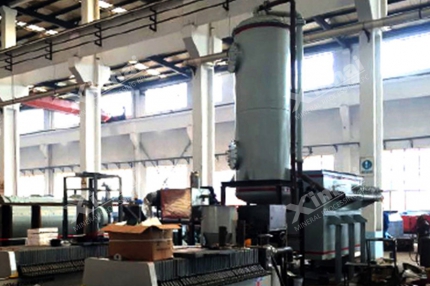
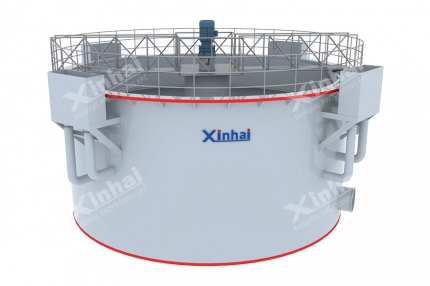
In gold processing, cyanidation remains the most widely used method for gold extraction. However, in many operations—especially those involving gravity concentration—conventional cyanidation alone often fails to deliver optimal recovery rates. This is where intensive leaching (also known as intensive cyanidation) serves as a critical supplement to the process. By applying intensive leaching to high-grade gravity concentrates, gold recovery can be significantly improved, leaching kinetics accelerated, and overall plant efficiency enhanced. Read on to gain an in-depth understanding of the “power” behind this process.
Note: The effectiveness of intensive leaching depends on ore characteristics and must be validated through metallurgical testing. The methods described herein are for reference only and are not universal solutions.
Use the table of contents below to navigate through the guide:
01Why Conventional Cyanidation Falls Short
In conventional gold processing plants, cyanidation is applied to the entire ore stream after grinding.
However, in practice:
The leaching process is relatively slow (typically requiring 24–36 hours or longer).
Gravity concentrates are not treated efficiently.
High-value gold may not be fully recovered.
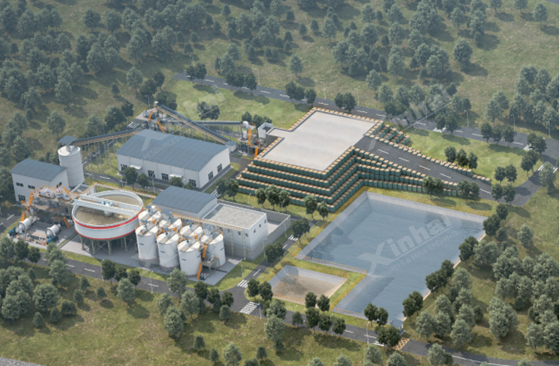
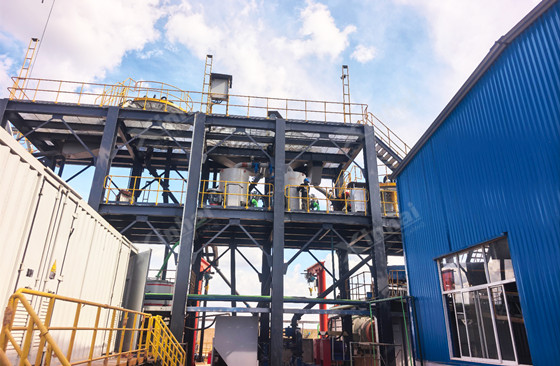
In a recent 500 t/d project in Africa, the grinding circuit achieved the following targets:
Even at this fineness, conventional cyanidation alone could not fully recover coarse gold from the gravity concentrate. After joint evaluation by technical and engineering teams to determine gravity separation equipment selection and gold plant design, a combined flowsheet of gravity separation + intensive leaching + cyanidation was ultimately adopted.
02How Intensive Leaching Improves Gold Recovery?
For refractory gold ores, conventional cyanidation typically achieves recovery rates below 80%, sometimes even under 60%. However, employing an intensive leaching system can effectively enhance gold extraction. The following summary is derived from a project report of a 500 t/d gold processing plant in Africa, verified as an effective solution:
1. Faster Leaching Kinetics
In the project design:
Pre-treatment time: ~6 hours
Leaching time: ~36 hours
By applying intensive leaching to concentrates, the overall effective leaching time for high-grade gold is significantly reduced.
2. Higher Recovery from Gravity Concentrates
Gravity separation captures coarse gold early, but without proper treatment, part of it may be lost.
With intensive leaching:
Gold in concentrates is fully exposed
3. Recovery is significantly improved
This is particularly important for ores with free gold or coarse particle distribution.
Improved Overall Plant Efficiency
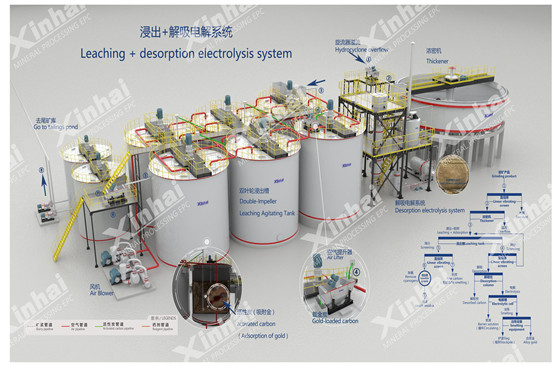
In the 500 t/d gold processing plant flowsheet:
Crushing → Grinding → Gravity Separation → Intensive Leaching → Cyanidation
This configuration:
Reduces load on the main cyanidation system
Improves reagent efficiency
Stabilizes plant performance
Check similar projects to see how different ores are treated in practice.
☞Browse Similar Gold Plant Projects
03Intensive Cyanidation vs Conventional Cyanidation
The differences between intensive leaching and conventional cyanidation mainly lie in four aspects: treatment target, leaching rate, time cost, and reagent consumption control, as detailed below:
Metric | Conventional Cyanidation | Intensive Leaching System | Improvement |
Treatment Target | Whole ore / Low to medium grade | Gravity concentrate / High grade | Highly targeted |
Leaching Rate | 85%–92% (high variability) | 98%–99.5% (stable) | +5% or more |
Time Cost | Over 36 hours | 4–12 hours | Reduced by 60% or more |
Reagent Consumption Control | Consistently high | Localized, precise, high-intensity | Better overall cost efficiency |
The core of intensive leaching is to improve contact, mass transfer, and reaction kinetics between gold and cyanide, overcoming limitations of conventional cyanidation (such as passivation layer formation, oxygen deficiency, surface adsorption, etc.).
04Is Intensive Leaching Right for Your Plant?
This content outlines four key scenarios where enhanced leaching methods are prioritized over conventional gold cyanidation process to improve gold recovery, lower costs, or overcome technical and environmental constraints.
1. Processing Refractory Gold Ores (Core Application)
Used when conventional cyanidation yields low recovery (<80%, sometimes below 60%).
Fine-grained encapsulated gold (<10 μm): Pre-treatment (microwave roasting, pressure oxidation, bio-oxidation) disrupts the ore structure, raising recovery above 90%.
Ores with harmful impurities (As, Sb, S, C): Enhanced leaching counters cyanide consumption, gold “preg-robbing,” and sulfide encapsulation, improving recovery by 10–15%.
Low-oxidation primary sulfide ores: Combined pressure oxidation and enhanced leaching break down sulfides to accelerate gold dissolution.
2. When Conventional Cyanidation Underperforms
Subpar recovery rates (e.g., oxide ores <85%, sulfide ores <80%) are not caused by operational issues.
High gold content in tailings (>0.3 g/t), indicating incomplete extraction.
Changes in ore properties (e.g., deeper mining, altering mineralogy) that reduce cyanidation efficiency.
3. Cost Optimization and Environmental Compliance
High cyanide consumption (>1 kg/t): Enhanced leaching cuts usage by 15–75%, lowering costs and waste treatment needs.
Strict environmental regulations: Methods like bioleaching or closed-loop systems reduce pollutants and aid compliance.
Large-scale operations: Faster leaching (≥2× speed) boosts throughput, lowering energy and labor costs per unit.
4. Special Production Contexts and Resource Recovery
Low-grade ores (<1 g/t): Pre-concentration (e.g., flotation) combined with enhanced leaching makes extraction economical.
Recycling old tailings: Recovers gold left by outdated processes, adding value.
Remote or space-limited sites: Modular systems (e.g., pressure/bioleaching) minimize footprint and construction time.
Conclusion
Enhanced leaching is justified when:
Ore is refractory, cyanidation recovery is low, reagent use is excessive, or environmental pressures are high.
The benefits (higher recovery, lower costs, compliance) outweigh upgrade expenses.
Refractory gold ores represent the most common and critical application.
Ready to transition from exploration to production?
Contact our engineering team for customized mineral processing solution.
 marketing@xinhaimining.com
  0086 13810327080






 CHAT
CHAT MESSAGE