Boron is used in glass, ceramics, agriculture, and new-energy applications. China’s domestic boron resources are predominantly low-grade: many deposits are low-grade, while high-grade ore remains scarce, leaving the industry reliant on imports. Liaoning is one of the country’s core boron-producing regions, and a characteristic ore type there is particularly challenging to process: low-grade boron-magnesium ore, whose liberation characteristics make beneficiation difficult. As demand from the photovoltaic glass and new-energy sectors continues to grow, upgrading this ore has both commercial potential and practical significance.
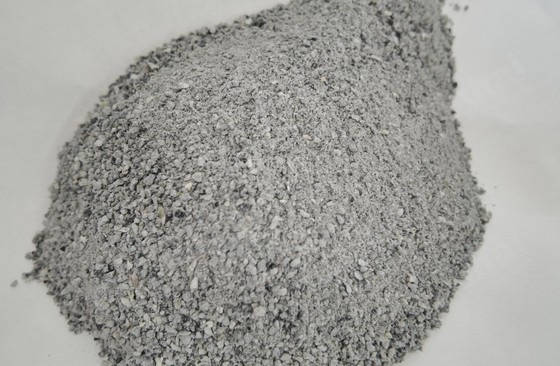
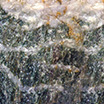
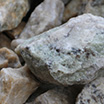
Figure 1. Run-of-mine sample of the Liaoning boron-magnesium ore (about 9% B head grade).
Xinhai Mine Research Institute continues to expand its beneficiation testing across a wider range of ore types. The Liaoning programme described here marks steady progress on one of the more challenging types: low-grade boron-magnesium ore subjected to a complete test programme covering grinding and classification design, reagent development, and closed-circuit verification. This article focuses on the final stage, which is often given less attention in test reports, because it is where the reliability of the results is established.
Use the table of contents below to navigate through the guide:
01A Grinding-Classification Regime Set by the Ore Itself
The first decision in a flotation programme is the target grind size. For this ore, it was determined by the particle-size distribution rather than a standard specification. Stage one used coarse grinding: the feed was ground for three minutes, producing a grind with approximately 40% passing 200 mesh. The material was then screened at 32 mesh. Because the plus-32-mesh fraction had a relatively high boron content, it was recovered separately as a product; grinding it further would have consumed energy and risked losing already-liberated boron minerals to the slimes. Material passing 32 mesh went on to 200-mesh classification, with oversize returned to the ball mill for eight minutes of secondary grinding. This brought the flotation feed to approximately 90% passing 200 mesh, providing the liberation required for the subsequent separation.
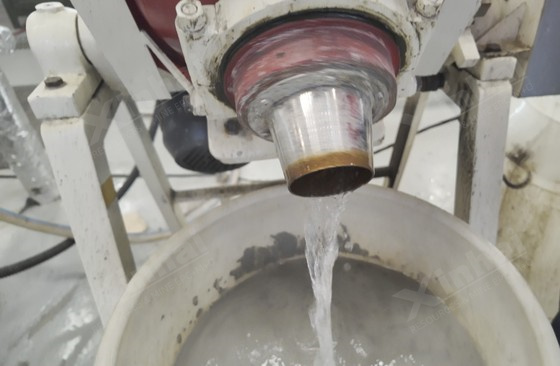
Figure 2. Rod mill discharge in the grinding stage of the boron-magnesium ore testwork.
The reagent selection followed the same test-based approach. The initial scheme, using sulfuric acid as the sole modifier (reagent code 301 in the laboratory records), did not produce the expected results in preliminary tests; adding a warm-flotation reagent alone produced only a marginal improvement in grade. Only after multiple rounds of testing under different conditions did the team settle on a combination scheme: a collector–frother combination whose specific reagent names and dosages remain internal to the report. Under the final scheme, the boron grade of the concentrate stabilised at 12–13%.

Figure 3. Wet sieve analysis isolating the plus-32-mesh fraction for separate recovery.
02Closed-Circuit Verification: Recycling Feed, Water and Reagent
Open-circuit runs establish what a flowsheet can do once. For plant owners, the key question is how the flowsheet performs over repeated cycles. In this campaign, closed-circuit verification reproduced three aspects of continuous operation that cannot be captured in a single-pass test.
Recycled coarse concentrate. The plus-32-mesh product recovered in one batch was blended into the next 500 g raw-ore feed and ground together with it, with grinding time extended by 20–30 seconds to account for the returned solids. In a commercial circuit, products and returned streams continuously re-enter the grinding circuit; testing every batch with fresh feed alone could overstate the result.
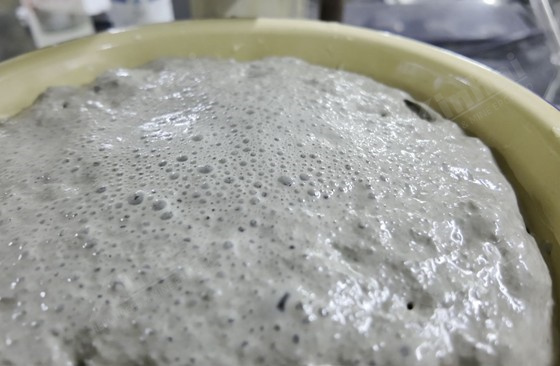
Figure 4. Froth accumulation managed during the closed-circuit campaign.
Supernatant wash water with residual reagent. Open-circuit exploration used fresh water for washing. In the closed circuit, wash water was taken from the clarified supernatant of the middlings and tailings, so residual reagents were carried forward in the recycled water. Fresh reagent additions were reduced over successive cycles as the loop matured. This change tests two factors at once: whether grade holds when water chemistry shifts, and whether the scheme remains effective as fresh reagent input falls.
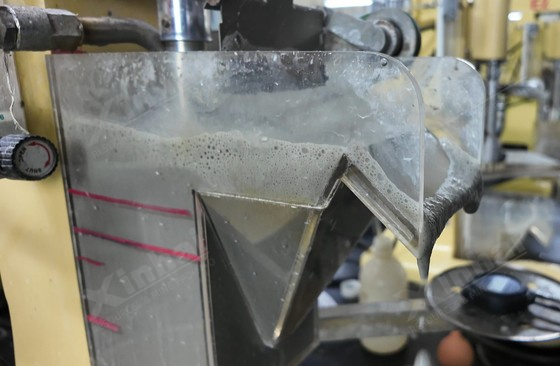
Figure 5. Froth launder overflow in the closed-circuit flotation verification.
Froth control by process step, not by dose. The circulating load revealed a problem that had not appeared in open-circuit tests: froth accumulated batch after batch, became increasingly viscous, and carried reagent away from the pulp, reducing contact between the ore and the collector. The obvious response — trimming or retuning the reagent scheme — could have disrupted a reagent system that was otherwise performing well. Instead, the team inserted a physical step: rougher concentrate passed through vacuum dewatering in a filtering flask, which reduced excess froth and removed surplus froth liquid before the solids returned to the pulp. Froth build-up subsided, the circuit steadied, and the concentrate grade remained stable.
| Parameter | Laboratory result |
|---|
| Boron head grade | Approximately 9% |
| Boron concentrate grade | 12–13%, stable across cycles |
| Stage 1 grinding | 3 min, approximately 40% −200 mesh |
| Coarse product cut | +32 mesh, recovered separately as product |
| Stage 2 regrinding | 8 min, flotation feed approximately 90% −200 mesh |
| Closed-circuit return | Previous +32-mesh product returned to the next 500 g feed; grinding time extended by 20–30 s |
| Closed-circuit wash water | Clarified middlings and tailings supernatant; fresh reagent additions reduced with each cycle |
03Reading the Result Before Commissioning a Plant
Three points are relevant to anyone evaluating a similar deposit. First, the grade improvement is specific to the test conditions: the 12–13% result reflects this ore’s mineralogy, grinding-classification regime, and reagent combination. Another deposit of the same ore type may respond differently, which is why ore-specific testwork precedes flowsheet design. Second, these are laboratory-scale results; pilot and plant verification under project-specific conditions remain necessary before claims are made about commissioning or plant performance. Third, the transferable element is not the number but the method: set grind sizes based on liberation behaviour, develop reagents through documented condition tests, and use closed-circuit testing with recycled product and water to assess the flowsheet’s performance under circulating conditions.
Owners evaluating a testwork provider can use one question as a guide: does the closed circuit return concentrate to the next feed batch, and does it use recycled supernatant for washing? A flowsheet that performs under those conditions in a 500 g test is better positioned for subsequent scale-up evaluation at 500 tonnes per day.
The next step for your ore. Xinhai’s laboratory conducts mineral processing testwork using this sequence: open-circuit exploration first, followed by closed-circuit verification. This approach is used for boron deposits and other lean or complex ores. Send a representative sample, and the programme will report grind-size distribution, reagent response, and circuit stability under circulating conditions, so flowsheet decisions rest on measured behaviour rather than borrowed experience. Request a testwork quotation to start the sample evaluation.
04Frequently Asked Questions
What grade improvement did the boron-magnesium ore testwork achieve?
The boron grade increased from an approximate head grade of 9% to a concentrate grade of 12–13%, which remained stable across closed-circuit laboratory cycles. These are laboratory-scale results, not industrial plant performance.
Why does the testwork recycle coarse concentrate into the next feed batch?
A working plant continuously reintroduces products and returned streams into grinding and separation. Blending the previous batch’s plus-32-mesh concentrate into the next 500 g feed, with grinding extended by 20–30 seconds, simulates that circulating load. The verified flowsheet therefore reflects continuous operation rather than ideal single-batch behaviour.
How is froth accumulation controlled during closed-circuit flotation testwork?
By adding a process step rather than changing reagent dosages. Rougher concentrate was vacuum-dewatered to reduce accumulated froth and remove excess liquid from it, then returned to the pulp. The reagent scheme remained fixed, so the downstream stabilisation resulted from the physical intervention alone.
 marketing@xinhaimining.com
 0086 13810327080






 CHAT
 MESSAGE