Every mine leaves something behind. Whatever the plant could not recover at the time goes into a tailings storage facility and stays there. For most of mining history, that was the end of the story. Increasingly, it is not.
Zambia offers a clear example. KCM has signed a US$498 million EPC contract for a tailings leaching plant designed to add roughly 70,000 tonnes of copper a year, all recovered from material already mined and milled once. South Africa is moving in the same direction: the Soweto tailings retreatment project has completed its DFS, with 600,000 tonnes a month of old tailings in scope and a final investment decision targeted for December.
Neither project is opening a new orebody. Both are going back to what a previous generation of miners moved, milled, and discarded. That shift is worth understanding, because it changes what a mine is.
Use the table of contents below to navigate through the guide:
01Tailings as a resource, not just a liability
A tailings dam holds everything the plant could not sell at the time. That is the key phrase: at the time. Three things have changed since much of this material was deposited.
First, technology has moved. Fine-grained recovery has improved beyond what was economic decades ago, and gravity, magnetic and flotation equipment now work at particle sizes that used to be written off. Second, grades have fallen. When a new copper deposit averages a fraction of a percent, an old tailings dam that still carries a few tenths of a percent of metal starts to look like an orebody. Third, the prices of many metals are higher and the demand for them is more strategic, so material that once lost money can now carry a project.
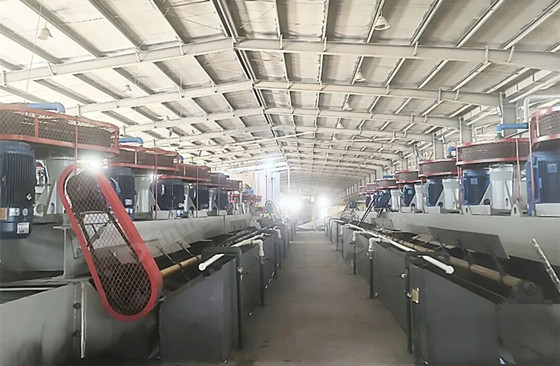
There is a fourth driver that has nothing to do with metal prices. Tailings dams carry risk and cost. They must be monitored, maintained and eventually closed, and every year of operation adds to the closure liability. A dam that can be reprocessed becomes smaller, better characterised and cheaper to close. Treatment and compliance stop being pure cost centres and start producing revenue.
02Two routes: recover the metal, or de-risk the storage
Most tailings projects take one of two routes, and many end up combining them.
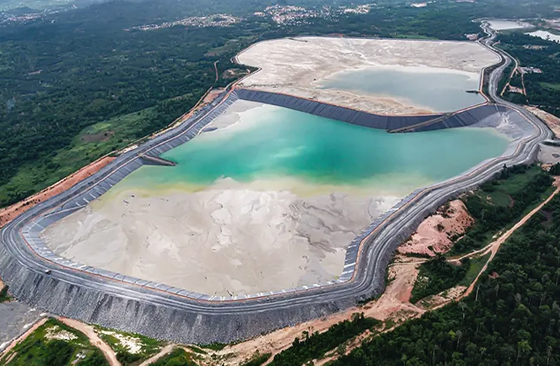
Reprocessing treats tailings as feed. The material is re-mined, sometimes hydraulically, then put through a flowsheet designed around what is actually in it. Where the remaining values are coarse or dense, gravity separation and magnetic separation can do the work. Where they are fine and finely disseminated, flotation is usually the answer. Where the target metal sits in oxidised or complex material, leaching followed by solid-liquid separation and electrowinning or precipitation takes over, which is the route the Zambian project follows. For projects focused on recovering valuable minerals from existing tailings, tailings re-processing provides a process route tailored to the characteristics of the tailings.
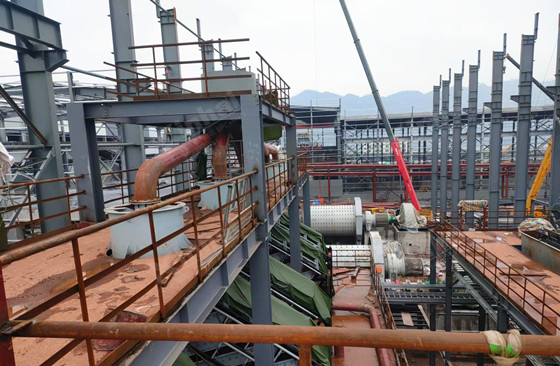
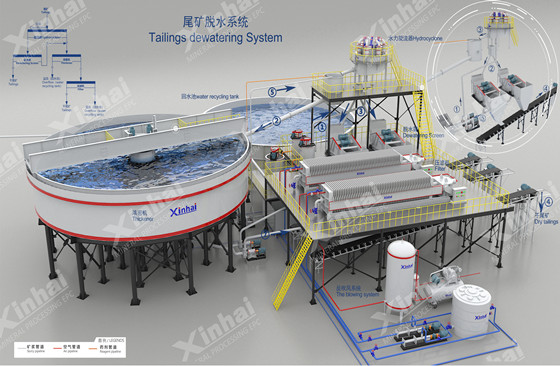
Dry stacking treats tailings as a storage problem. Instead of pumping a dilute slurry into a dam, the plant thickens and dewaters the stream until the solids can be stacked and compacted, and the water is recovered for reuse. The volume that has to be stored drops, the dam can be smaller or eliminated, and the water balance improves, which matters a great deal in dry regions and in jurisdictions with tight permitting. This approach is commonly implemented through a tailings dry stacking process designed to achieve effective dewatering, water recovery, and solid tailings disposal.
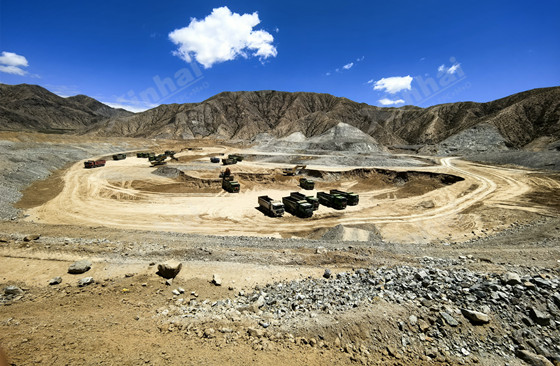
The two routes answer different questions. Reprocessing asks what else can be recovered. Dry stacking asks how to hold what is left, safely and cheaply. A well-designed project usually does both: recover what is worth recovering, then dewater and stack the remainder.
03What sits behind a tailings project
Tailings projects have a reputation for being simpler than greenfield mines, because the material is already on surface and the infrastructure exists. That is partly true, and it hides where the real work is.
The feed is the first unknown. A tailings dam is not a uniform orebody. Particle size, mineralogy and metal content vary with depth, with the original milling campaign and with how the material was deposited, so the first task is always a sampling programme that respects that variability. A flowsheet built on an unrepresentative sample will not survive commissioning.
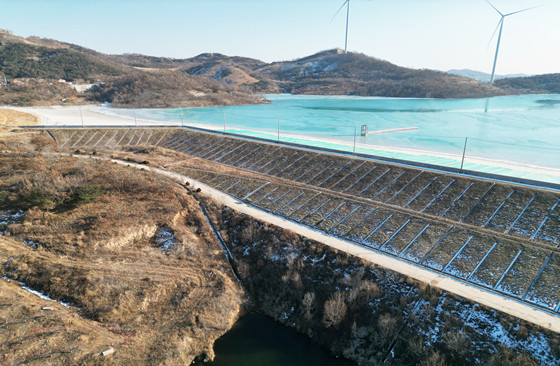
Water is the second. Every tailings operation is also a water operation. Recovery, recycle and the balance across the plant usually decide both the operating cost and whether the site can meet its environmental conditions.
Then there is the equipment question. Tailings circuits combine thickening, dewatering, re-selection and often flotation or leaching, and each stage has its own design logic. Getting the interfaces right, between a hydrocyclone and a filter, or between a leach circuit and the recovery step that follows it, is what determines whether a plant reaches its design numbers.
04The equipment chain, stage by stage
It helps to read a tailings flowsheet as four connected stages.
Stage | What it does | Typical equipment |
Thickening | Raises solids concentration before dewatering or stacking | Hydrocyclones, thickeners |
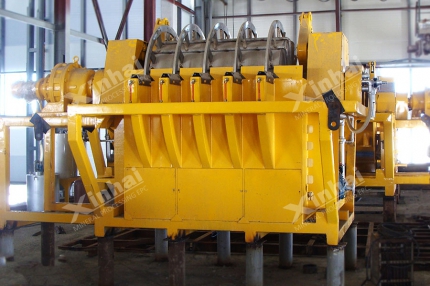
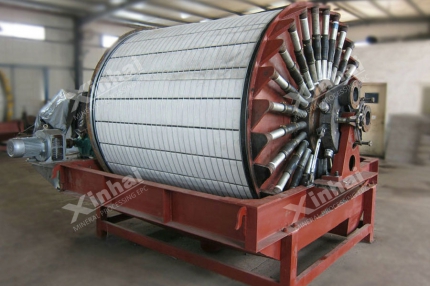
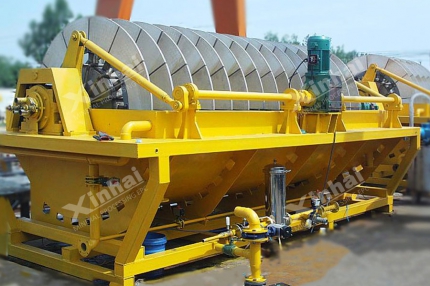
Dewatering | Removes water so solids can be stacked or sold | Dewatering screens, filter presses, vacuum filters |
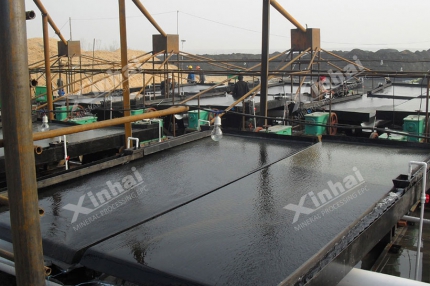
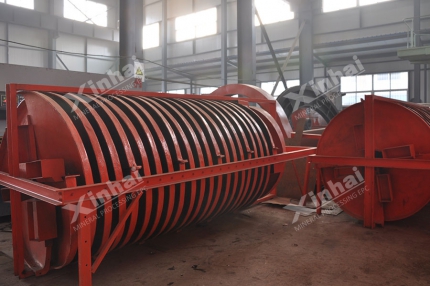
Re-selection | Recovers remaining coarse or dense values | Jigs, shaking tables, centrifugal concentrators, disc magnetic separators |
Flotation / leaching | Recovers fine or complex values | Flotation cells, leaching and solid-liquid separation systems |
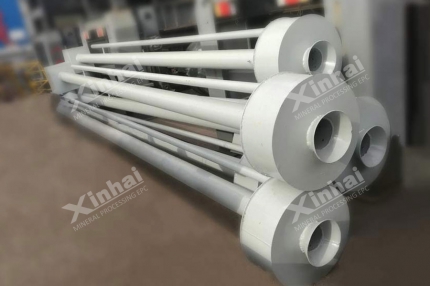
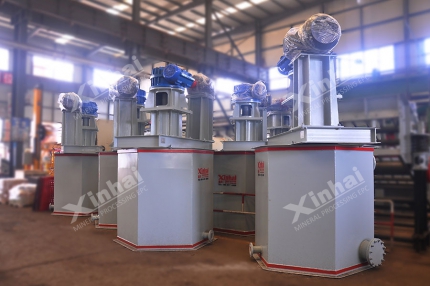
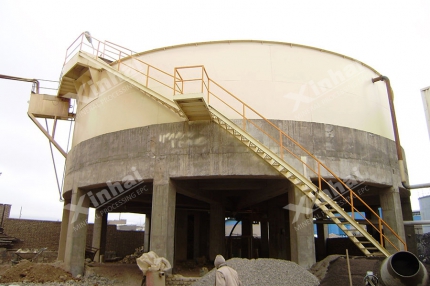
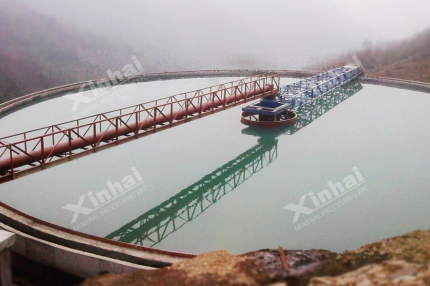
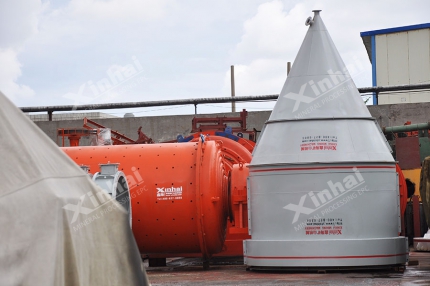
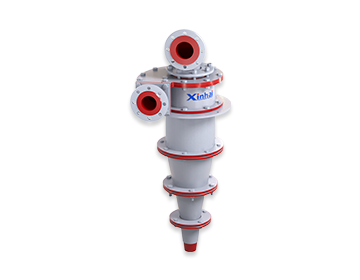
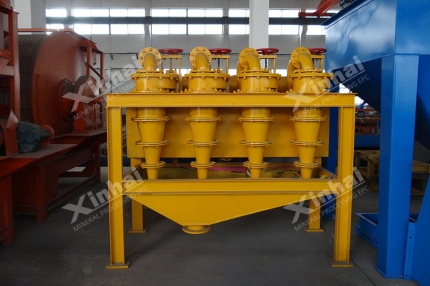
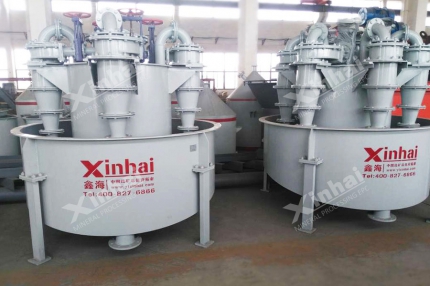
On the thickening stage, Xinhai builds a concentration hydrocyclone specifically for tailings dry discharge. It uses a distinct feed port geometry and an optimised cylinder and cone profile to reach underflow densities of up to 75 percent, with a fine overflow. In dry stacking duty, that is what lets the downstream dewatering equipment run at a manageable load.
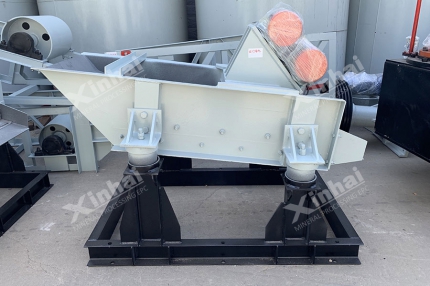
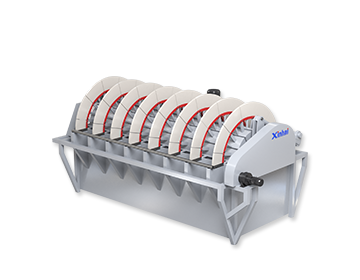
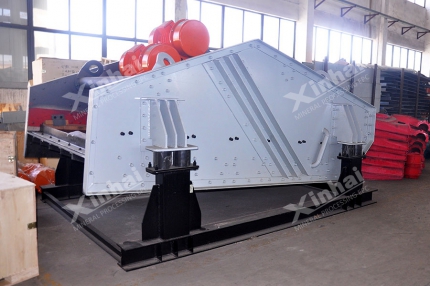
For dewatering, the company supplies high-frequency dewatering screens and filter presses. The dewatering screens are built for concentrate and tailings duty in metal mines including gold, lead-zinc, iron and copper, and the filter press range covers filtering areas from 1 to 156 square metres, with cake moisture controlled down to the range required for stacking or transport.
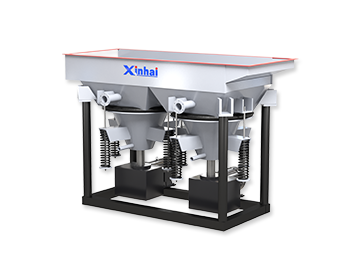
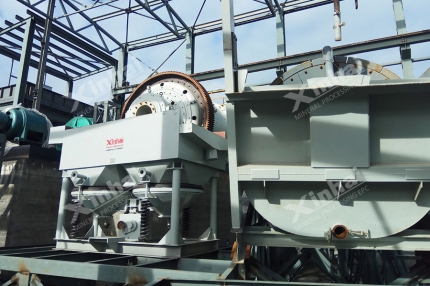
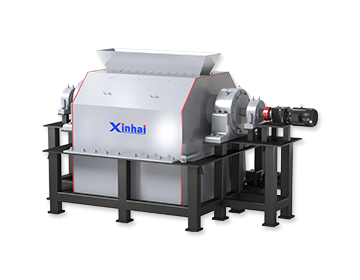
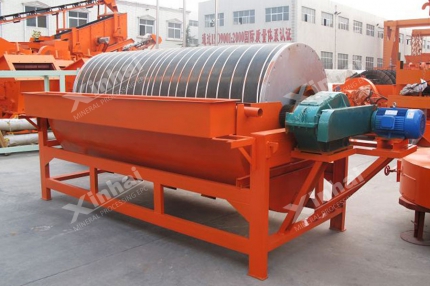
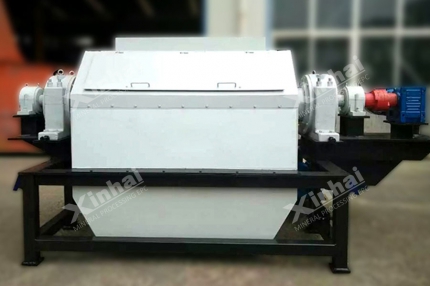
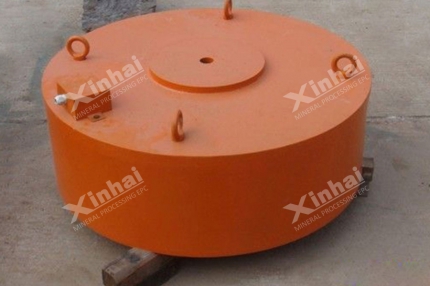
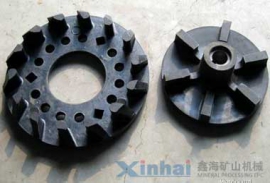
For re-selection, gravity equipment matters more than many operators expect. Xinhai’s jig is used for recovering metal from mill tailings, and its suspended-vibration cone concentrator is designed for fine material down to a few tens of microns, which makes it applicable to both new and old tailings. Where the residual values are magnetic, disc magnetic separators built for tailings re-selection handle large flows at low grade, and the design extends service life well beyond that of a conventional unit.
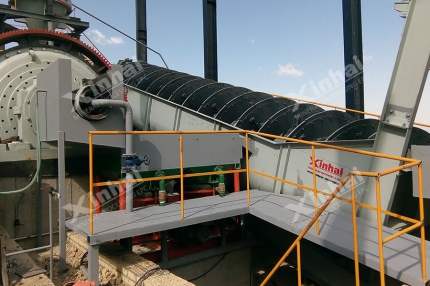
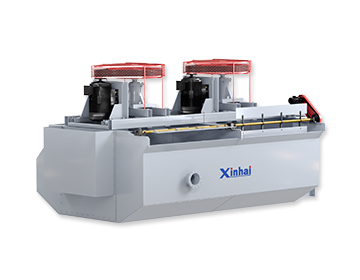
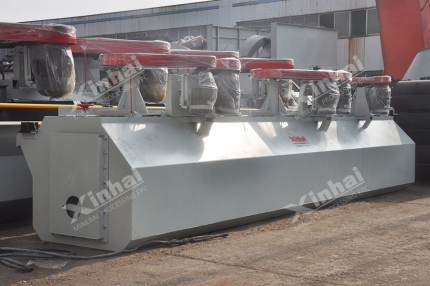
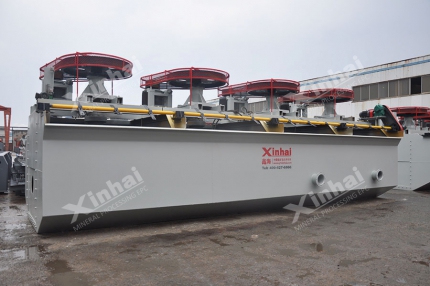
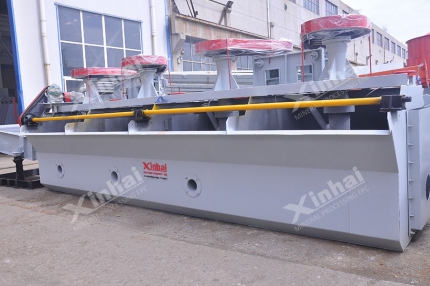
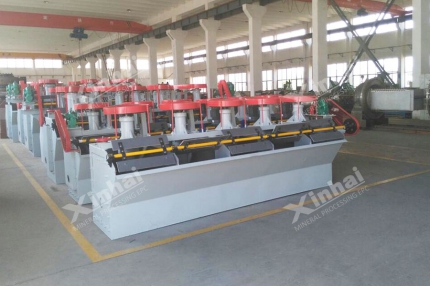
For the fine and complex end, the flotation range runs from conventional mechanical cells to large circular cells and coarse-particle units, and the same company supplies the leaching and solid-liquid separation equipment that a hydrometallurgical tailings circuit needs.
05From design to commissioning
Equipment is only part of the answer. A tailings project also has to be engineered as a system, and this is where the choice of delivery model starts to show.
Xinhai’s experience in this area goes back decades. Its design institute chief engineer has worked on more than 50 tailings dry stacking design projects in China and ten tailings dry stacking engineering projects, and the group’s testing laboratory supports recovery testwork on tailings samples before a flowsheet is fixed. That combination, testing, design, equipment manufacturing and on-site delivery, is what makes an integrated EPC+M+O approach practical on tailings work. The value is not in any single machine. It is in having one party accountable for the interfaces between thickening, dewatering, re-selection and recovery, and for reaching the design numbers at commissioning.
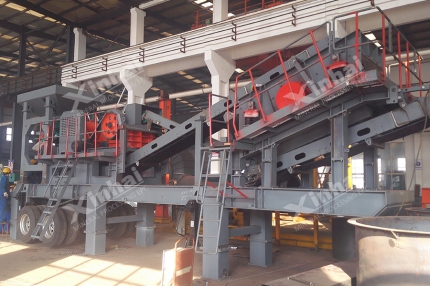
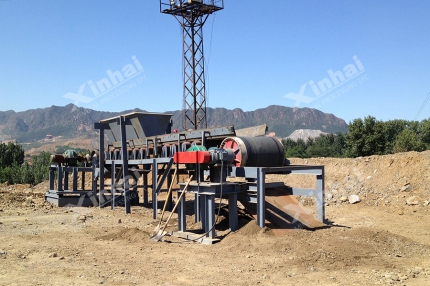
For smaller or remote tailings operations, the delivery model can be simplified further. Xinhai’s mobile beneficiation plants ship as containerised, factory-assembled units, and can be configured with a separate tailings dry stacking module, which suits small tailings resources or sites where building a conventional plant is not justified.
06What to establish before committing
Tailings projects fail for predictable reasons, and most of them are visible early.
A representative sampling programme, planned around how the dam was built, not just where the drill holes landed.
Recovery testwork on that sample, so the flowsheet and the achievable recovery are known before capital is committed.
A water balance that accounts for recovery, recycle and losses across the whole site.
A realistic view of the equipment condition if existing plant is being reused, which is often the real bottleneck in a retreatment project.
A closure and permitting plan, since regulators increasingly treat tailings management as a condition of operating, not an afterthought.
Do that work first and a tailings project can be one of the faster routes to production, because the material is already on surface and the permitting path is usually better understood than for a new mine.
07The value of tailings was always there
A tailings dam is a record of what a plant could not recover when it was built. Every improvement in separation technology, and every rise in metal prices, makes part of that record worth revisiting. Zambia and South Africa are early examples of a routine that will become more common as grades fall and environmental requirements tighten.
If you are assessing a tailings resource, the practical starting point is testwork on a representative sample. Xinhai can run recovery tests on your tailings, then use the results to developa flowsheet, an equipment list, and a realistic production figure. Talk to the Xinhai team to start with a sample.
Sources: project information in this article is based on public announcements: KCM tailings plant EPC contract and Soweto tailings retreatment project update. Equipment figures are drawn from Xinhai product documentation. This article is industry commentary for information only and does not constitute investment advice.
 marketing@xinhaimining.com
  0086 13810327080




 CHAT
CHAT MESSAGE